• Everyone, please help make our jobs easier and choose the correct category. Thank you

Our new RCA was just fired

This brings up another question in my head. Not trying to be argumentative, but I wonder if all RCAs function the same in all offices?

Where I am, you have be able to come in and do it all. Case up 500 addresses on dozens of different roads names/numbers that are as confusing as can be. Ex. 218449 E 1860 rd; 816904 S 2040rd, and on and on. Looking at the case, there is no clear pattern, no obvious order. Then you've got 100 packages and spurs that go to these addresses to put up markers for, and get in order. Until you've managed to memorize that case, you are on your own to devise some type of "cheat sheat" of reminders of how to find an address while you are casing all those markers, loose flats, and non-sorted mail pieces. It can take forever.

Because there is so much free Amazon, you've got to be able to divide your route (in your head mostly) into two halves before loading. You're going to have to come back to get the second half of your mail because there is no room in your POV for all of it. Then you've got 100+ miles of gravel roads to navigate, also in no logical order. Lots of turns, turn-arounds, switch-backs, and only 50% of the intersections have sign markers.

Other than good, friendly co-workers, there is no help at all. Everyone seems to realize there's no way anyone is picking that up after 3 days. Lots of aid from the regular the first few weeks.

I think our expectation from training might be different. I think you (perhaps) expect to be proficient at the end of the training period--the RCA can do the route on their own as well as the regular. That's not my expectation. At the end of the training period, the RCA should understand how to do the job, and be able to complete it in a reasonable amount of time for a brand new employee without screwing up too much. I agree that sometimes RCAs might need help to finish route beyond the 3 days, but I wouldn't consider that training.

Regarding difficulty of routes: there's a route in my office that has a development where the streets ( called "Lanes") are all named after states, and each street has a cul de sac off of it, also named after the state (called "Courts") that share the same numbering system, i.e. there's a 2701 Delaware Lane *and* and 2701 Delaware Court. If the real estate developer was trying to cause misdelivered mail he could not have created a better system for it!

As far as I know, everyone divides up their routes into sections, even the seasoned old pros--I'm a 14 year veteran of the Postal Service, and I divide my route up into four sections every day, and deal with each fourth as I go along.
 
I think our expectation from training might be different. I think you (perhaps) expect to be proficient at the end of the training period--the RCA can do the route on their own as well as the regular. That's not my expectation. At the end of the training period, the RCA should understand how to do the job, and be able to complete it in a reasonable amount of time for a brand new employee without screwing up too much. I agree that sometimes RCAs might need help to finish route beyond the 3 days, but I wouldn't consider that training.

Regarding difficulty of routes: there's a route in my office that has a development where the streets ( called "Lanes") are all named after states, and each street has a cul de sac off of it, also named after the state (called "Courts") that share the same numbering system, i.e. there's a 2701 Delaware Lane *and* and 2701 Delaware Court. If the real estate developer was trying to cause misdelivered mail he could not have created a better system for it!

As far as I know, everyone divides up their routes into sections, even the seasoned old pros--I'm a 14 year veteran of the Postal Service, and I divide my route up into four sections every day, and deal with each fourth as I go along.

In our office, its the casing that takes forever to learn, as its a jumble of numbers mish-mashed everywhere. All numbers, all the time. 6 digit house number, 4 digit road numbers that jump around and come back at you all day.

You'll have a these 911 addresses like this fictitious "2040 Rd" and 10-20 other similar roads appear for bits at time throughout the route, hopscotching over every row of the case. Real brainmush stuff. With anyone new, someone that knows the case will have to jump in and help out in order to get it done at some point. If you're not out of the office by 10:30, you're going to be late for the truck, even if you do well out on the route.

Not sure how many work days it took before I could do it all by myself, and be back on time. I'd guess at least 8-10, and I was studying at home. Same with other new subs. Either someone helps on the case, or comes to help get the mail delivered. It works out because the office is small, and we watch out for each, and no when they'll need help. Without that, a newbie would be sunk.
 
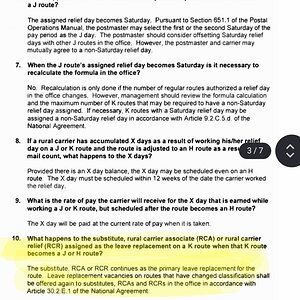
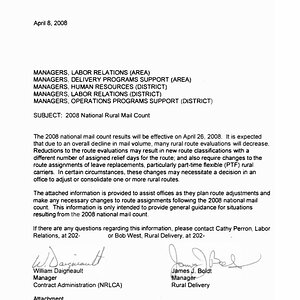
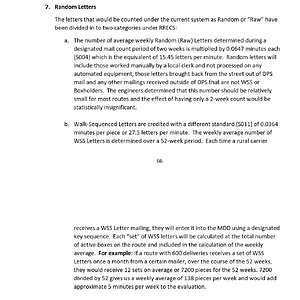
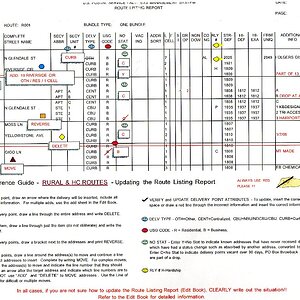
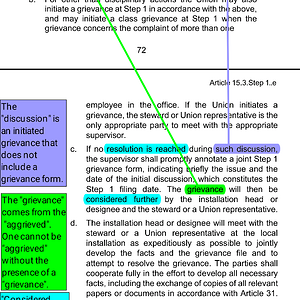
There is one, as @Wilco183 mentioned above. I have a copy of one because I had some issues with how two new RCAs showed up in my office, so I was provided with one. I had never seen one before, and I'm not sure if the academy trainers actually hand these out to participants because I was told to return this one to them because they're so scarce and expensive.
I still have mine from Rural Academy in 2012 (that I was sent to more than 2 months after being on the job).

pc40001.jpg
 
As an RCA, this "training" issue bowled me over from the very beginning.

I took this part time job to earn some insurance money after retiring kinda early from another career. I've been around the block and exposed to how things are done to train and retain employees, and was genuinely surprised/shocked at how woeful and inept the USPS training system is structured.

Similar experience here, I came from a career in heavy industry, and have yet to see anything beyond the academy that qualifies as "training" in any sense of the word.

My regular spent a heck of a lot of his own time teaching, showing, and helping me along. WAY beyond USPS policy. Right from the start, I realized that the training standards in place were nowhere close to what was needed to get someone out the door. Turning someone loose with that minimal training is simply malfeasance. Its the admin expecting these RCAs to work that should be blamed, not the RCA.

The regular who trained me the first time (I wasn't sent to academy until 2 months on the job) was just the opposite - she started by telling me all the things her reg did when she started, and told me that she would do the same to me just because she could. That was pretty much the extent to her OJT. It took training on another route with a different carrier later to get something useful. The most I learned from my reg was to Cover My Ass. Because sure as s*** she was going to (and did) throw me under the bus at every chance.

Its so obvious its confounding. If they want good production from employees, they must train them competently. Yet, somehow USPS believes someone can basically learn this job in 3-5 days, or whatever. Unbelievable.
 
Management's expectations of craft always astound me .
They are not based in reality. They are dead to reason and common sense.

They put me in mind of the play Julius Caesar, when Mark Anthony says, "You rocks, you stones, you worse than senseless things!"
 
Last edited:
All -- [ Training Time ]

-- Maybe it is time to put the ball in manglement's court.

-- Since there has been postings of new RCA's being thrown on new routes during their early training days, then cite:

Article 9.2.M.2. A newly appointed rural carrier craft employee or a leave replacement assigned to more than one route WILL BE ALLOWED A REASONABLE period with pay to become FAMILIAR with the route and BECOME PROFICIENT.

-- Ask manglement what is "reasonable" period of time to become familiar and proficient. ( of course, manglement may say "The RCA is not assigned to the routes, just providing "assistance". )

-- When I began in the middle part of the last decade of last century, I was in a "well-stocked RCA" office, so was lucky to work one day a week for many, many months. Didn't match the regular's times until I had a year in -- and that was way before the avalanche of ( Amazon ) parcels and the increasing number of scans.

-- When manglement says "3 days should be sufficient." Be brave and ask manglement "Fine, let's see how you do on the route with 3 days of training."
 
There is one, as @Wilco183 mentioned above. I have a copy of one because I had some issues with how two new RCAs showed up in my office, so I was provided with one. I had never seen one before, and I'm not sure if the academy trainers actually hand these out to participants because I was told to return this one to them because they're so scarce and expensive.

As rural carriers, we don't get compensated for training new RCAs, so I understand the pushback from some regulars who don't want to do it. Training is not an easy job, it's not a job everyone has the skill to perform, and most of us would rather just walk in, deliver our mail and go home.

I'm probably in the minority here, but I think the three days training is sufficient if it's done right. If it's not done right, no amount of days will help. After three days, an RCA should be able to perform the functions of the job. Will they beat evaluation? No, but some supervisors, who are used to carriers who have 20 years of experience on H routes expect them to do so. Will they make mistakes? Of course, and regular carriers shouldn't flip out because a piece of mail is misdelivered, or third class mail is curtailed for those first few weeks.

Three days of training will not make a new RCA able to beat their evaluation or be perfect. Only time and experience will do that. This job is not a difficult one, in that you don't need to know how to use complicated machinery or process new information each day. It's not terribly complex work that we do, but it can be physically demanding and working outside in all sorts of conditions can be a challenge, but no amount of training is going to impact either of those factors.

The problem with the training program is that new RCAs very often don't get the three days of training in their offices. They're hired, they do four days at the Academy, and then they're thrown onto a route, sink or swim. I'm pretty critical of the four days spent at the Academy--I don't think it's a worthwhile use of anyone's time, and it's very expensive, but the fact is, some RCAs would receive zero training if it weren't for the Academy.
Just curious is there a rule on a RCA having to help a person going full time on a route lol
 
Apply again at a different office, good chance that you will get hired again. Hopefully deal with better management.
You know, I'm tempted. Wasn't quite like Mayberry RFD, but even with the stress, I really liked the job. Felt like I had good rapport w/coworkers and customers. Have RHD jeep. Exemplary driving record.
I've looked online but have seen no openings in southern Tn area, even though my ex office has apparently gone thru several more RCAs. There is something odd about that. Is it more cost effective to pay regs overtime? Maybe an omen given all the contract stuff.
I'm probably a person regulars would dislike since I would work hourly, no benefits. I asked a trainer at Academy if money is issue, why don't they just hire a bunch of RCA type folks. She did her librarian frown. At least she didn't whack me on the hand with a ruler.
bg
 
Waynorth -- "Just curious is there a rule on a RCA having to help a person going full time on a route lol."

-- Not really. Just like there is nothing about a regular arrier training / helping a new sub on a route.

-- One scenario might be an excessed regular getting / winning a regular route in an office the excessed carrier had never been before, so would have no idea about the route or the way the office opearates. It would be up to the sub on the route to help the new regular - hopefully.
 
yardbox -- "I asked a trainer at Academy if money is issue, why don't they just hire a bunch of RCA type folks."

-- To hire RCA's, manglement needs to have people want the job, take the test, and be able to pass the screenings -- which appears to be getting harder to do.
 
yardbox -- "I asked a trainer at Academy if money is issue, why don't they just hire a bunch of RCA type folks."

-- To hire RCA's, manglement needs to have people want the job, take the test, and be able to pass the screenings -- which appears to be getting harder to do.
Recruitment, training and retention.
 
Just curious is there a rule on a RCA having to help a person going full time on a route lol

There is. If the re-assignment was not voluntary, the regular is entitled to training time to learn the route. If the re-assignment was voluntary, they are not, but in my office, a long time regular who bid on a new route after about 20 years as a regular carrier on one route, received auxiliary assistance on the new route for four months (and that was pretty much the end of the "Subs all suck!" BS from him).

RCAs provide assistance as needed, so you can't refuse the work (well, you could, but you'd face discipline), even though it's the absolute worst when you run your assigned route for the day and then have to go help someone else get through theirs.
 
I'm probably a person regulars would dislike since I would work hourly, no benefits.

As a 35+ year employee, 25+ of those as a regular, we would love to have you!!!
Go for it. Look for the offices above, or personally go to offices nearby in your POV.
Speak to the PMs, ask if they'll be hiring anytime soon.
Mention your experience at first office, innocently.
I'm sure they're well acquainted with what a hopeless tool your last boss was.;)
 
There is. If the re-assignment was not voluntary, the regular is entitled to training time to learn the route. If the re-assignment was voluntary, they are not, but in my office, a long time regular who bid on a new route after about 20 years as a regular carrier on one route, received auxiliary assistance on the new route for four months (and that was pretty much the end of the "Subs all suck!" BS from him).

RCAs provide assistance as needed, so you can't refuse the work (well, you could, but you'd face discipline), even though it's the absolute worst when you run your assigned route for the day and then have to go help someone else get through theirs.
My thing is why should a RCA be helping a fulltimer that is getting paid a substantial amount more too learn a route she bid on and won. That also has twice the amount of years in
 
Waynorth -- "My thing is why should a RCA be helping a fulltimer that is getting paid a substantial amount more too learn a route she bid on and won. That also has twice the amount of years in."

-- In this case, the roles are reveresed. Help from any source should be appreciated.

-- In a small post office, it would be "cooperation to get the mail delivered."
 
My thing is why should a RCA be helping a fulltimer that is getting paid a substantial amount more too learn a route she bid on and won. That also has twice the amount of years in

I would say AUX help is warranted if missing dispatch / expresses is an issue - otherwise I would expect any carrier with many years in already to be able to pick up a route and get it done (albeit possibly running over eval for a few times) - RCAs already do this. Aux help is also technically part of the RCA gig.

If it is "training" help, then the new regular should go to management and ask for a training day - that way an RCA or another regular can Ride with them and get paid hourly to train.

If management is asking a RCA to help a Regular or another RCA "in-office" to case, or give explanation of a route layout, sort parcels while the helping RCA is also working a route of their own; then the helping RCA needs to be paid for the "extra time" to help/train on a green card.

In any case - it's easy money for an RCA. Just don't do anything for free.
 
yardbox -- "What is difference betw ARC and RCA well, and PSE?"

-- You should be familiar with the RCA position. So moving on to the ARC.

-- ARC -- Assistant Rural Carrier ( not to be confused with the Rural Carrier Assistant ) -- a newly ( well, from the 2015-2018 contract ) non-career position within the rural craft specially created to support package delivery on Sundays and federal holidays.

-- There is no test or entrance exam as with the RCA position, but are selected from a hiring list for an unlimited appointment term. ( way back when, TRC's were hired for 360 days, had to take a 6 day break before being able to be rehired )

-- May be required to supply a delivery vehicle. Eligible for EMA.

-- Have a probationary period of 90 work days or 1 calendar year.

-- No path to become a regular rural carrier. Would have to take the RCA exam, etc to become a regular carrier.

-- Pay schedule is on Table FOUR.

-- ARC usage limited to Sundays, federal holidays, and Saturdays ( case and carry a rural route if all others are working ). Package delivery only duing the peak Christmas season via MOU. 2018 -- 19 NOV 18 through 12 JAN 19. Not to be used Monday through Friday unless for a federal holiday.

-- Training: employee orientation in a self-study format, driver instruction and certification. Training specific to package delivery. OJT at assigned post office.

-- Not considered a leave replacement, hence do not appear on the Matrix.

-- The NRLCA will be happy to take dues from ARC's.


-- PSE -- Postal Service Employees ( APWU 2010-2015 contract )

-- Non-career bargaining employee. Hired for 360 days, at least a 5-day break before rehiring.

-- Got a whole Appendix ( A ) in the contract devoted to PSE's.

-- The number of PSE's can not exceed established percentages of career-employees.

-- Grade 3 pay = $11.21/hour up to Grade 8 pay = $17.43/hour ( no idea how the Grade level are applied )

-- The APWU covers a wide variety of jobs: clerks, custodians, vehicle maintenance, plant machine operators and so on.
 
Back
Top