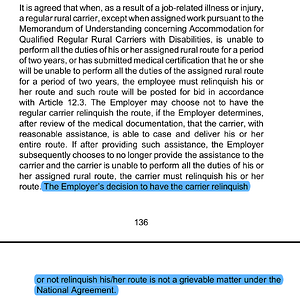
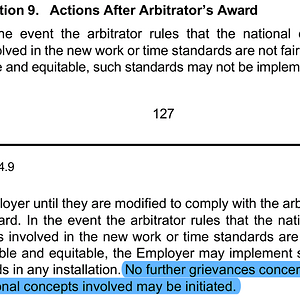
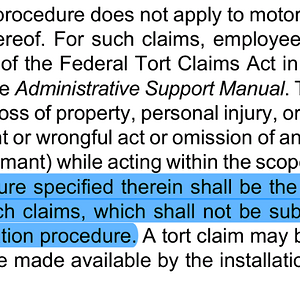
is there anywhere in writing that says management can force you to go to one cell for each customer even businesses and possibly 2 customers per cell . They say the reason is flats and letters are down and they want us to have less equipment to make room for Christmas packages and we won't be crowded . Anyone else hearing this?

You are using an out of date browser. It may not display this or other websites correctly.
You should upgrade or use an alternative browser.
You should upgrade or use an alternative browser.
Cell sizes
- Thread starter hojo
- Start date

RuralMunky
Member
It's managements discretion.
hojo -- They say the reason is flats and letters are down and they want us to have less equipment to make room for Christmas packages and we won’t be crowded . "
-- Better yet, ask manglement where are you going to put the usual increase in holiday catalogs and greeting cards? Once casing equipment leaves the office, it does not come back!
-- Until then get the Assistant District Representative alerted to manglement's plans.
-- Remind manglement of Step 4 ( C-6 ) that spells out what and when manglement's right to determine casing method are:
Manglement will determine the initial casing system when a rural route is created. In addition manglement may change the casing system:
a. when a regular route is vacant
b. when a route changes regular carriers ( including during the awarding process, provided the carrier is notified prior to accepting the route )
c. any time on an auxiliary route
d. when unserviceable equipment causes the need for change
e. anytime by mutual agreement
-- Don't really see anything in the above that deals with reducing established casing equipment just because mail volume is down - for now.
-- Ask manglement how much the "cash-strapped" USPS will have to pay for new labels for all of the office as well as the time for carriers to install the new labels.
-- Might as well mention the 23 DEC 2005 USPS letter: Clarification of Rural Delivery Standardization Procedures - Paragraph 2: while the goal outlined in RD SOP is to have a maximum of three pieces of casing equipment for all rural routes, there are exceptions that may warrant more than three pieces of equipment: routes with more than 700 deliveries and route with exceptionally high volume...
-- Manglement will probably ignore that just like they ignore Paragraph 1, which which requires manglement to evaluate rural carrier performance over a full quarter when actual work hours vary an average of three hours or more above or below evaluation. The review process is to determine what changes can be made to improve overall efficiency -- just like is spelled out on page 5 of the PO-603. Doubt if manglement will make a change as the USPS is getting a lot of "free work" when carriers go over evaluation with the increase of parcels.
-- If manglement goes ahead and reduces casing equipment anyways, why not ask the local fire department to pay a visit during the Christmas crunch time - like on a Monday. Maybe the firemen could determine if having parcels all over the work floor is a fire hazard.
-- Good luck.
-- Better yet, ask manglement where are you going to put the usual increase in holiday catalogs and greeting cards? Once casing equipment leaves the office, it does not come back!
-- Until then get the Assistant District Representative alerted to manglement's plans.
-- Remind manglement of Step 4 ( C-6 ) that spells out what and when manglement's right to determine casing method are:
Manglement will determine the initial casing system when a rural route is created. In addition manglement may change the casing system:
a. when a regular route is vacant
b. when a route changes regular carriers ( including during the awarding process, provided the carrier is notified prior to accepting the route )
c. any time on an auxiliary route
d. when unserviceable equipment causes the need for change
e. anytime by mutual agreement
-- Don't really see anything in the above that deals with reducing established casing equipment just because mail volume is down - for now.
-- Ask manglement how much the "cash-strapped" USPS will have to pay for new labels for all of the office as well as the time for carriers to install the new labels.
-- Might as well mention the 23 DEC 2005 USPS letter: Clarification of Rural Delivery Standardization Procedures - Paragraph 2: while the goal outlined in RD SOP is to have a maximum of three pieces of casing equipment for all rural routes, there are exceptions that may warrant more than three pieces of equipment: routes with more than 700 deliveries and route with exceptionally high volume...
-- Manglement will probably ignore that just like they ignore Paragraph 1, which which requires manglement to evaluate rural carrier performance over a full quarter when actual work hours vary an average of three hours or more above or below evaluation. The review process is to determine what changes can be made to improve overall efficiency -- just like is spelled out on page 5 of the PO-603. Doubt if manglement will make a change as the USPS is getting a lot of "free work" when carriers go over evaluation with the increase of parcels.
-- If manglement goes ahead and reduces casing equipment anyways, why not ask the local fire department to pay a visit during the Christmas crunch time - like on a Monday. Maybe the firemen could determine if having parcels all over the work floor is a fire hazard.
-- Good luck.

Rt2mailman
Well-known member
It is management's discretion, but they can only require you to have two customers in a 2" slot (ie 1" per customer), not two addresses in a 1" slot. If you need more space for customers that receive lots of mail, you can request to have more inches for that slot. If your pm rejects your request, file a grievance. He would have to show that you don't need a bigger slot on normal/average days. In these situations I've conceived of carriers putting other customer's mail in that slot "accidentally" before the pm comes top check. This information is in the PO 603 and has been discussed on this site before, but I can not remember the thread's title.
RuralMunky
Member
<blockquote class="spPostEmbedQuote">
<strong>Rt2mailman said </strong>
It is management's discretion, but they can only require you to have two customers in a 2" slot (ie 1" per customer), not two addresses in a 1" slot. If you need more space for customers that receive lots of mail, you can request to have more inches for that slot. If your pm rejects your request, file a grievance. He would have to show that you don't need a bigger slot on normal/average days. In these situations I've conceived of carriers putting other customer's mail in that slot "accidentally" before the pm comes top check. This information is in the PO 603 and has been discussed on this site before, but I can not remember the thread's title.
</blockquote>
Yes, it has been discussed. And nowhere does it say they can't go to 1/2" per address. Below is from the PO-603. Note the word <strong>"Normally"</strong>...that's why it's managements discretion. Remove that from the PO-603 and you may have a case.
223 Casing Methods
223.1 General
The casing systems used in rural delivery service are divided into three categories: the one-bundle system, the modified one-bundle system, and the two-bundle system. In all three casing systems, you may case delivery point sequenced mail, at your option, in accordance with 15, Schedules.
223.2 One-Bundle System
223.21 Description
When the one-bundle system is used, case both letter and flat mail into the letter case separations. Using this system, after considering the volume and mix of mail on the route, <strong>the manager determines the width of separations and number of addresses per separation</strong>. Note: Unless otherwise approved by your postmaster or supervisor, or as dictated by the type of distribution equipment used, no separation must be less than 2 inches wide. <strong>Management must consider volume and characteristics</strong> of the individual deliveries when <strong>determining</strong> <strong>width</strong>.
223.22 Letters
Case letters into the case that <strong>normally</strong> is arranged with one or two addresses per 2-inch separation.
<strong>Rt2mailman said </strong>
It is management's discretion, but they can only require you to have two customers in a 2" slot (ie 1" per customer), not two addresses in a 1" slot. If you need more space for customers that receive lots of mail, you can request to have more inches for that slot. If your pm rejects your request, file a grievance. He would have to show that you don't need a bigger slot on normal/average days. In these situations I've conceived of carriers putting other customer's mail in that slot "accidentally" before the pm comes top check. This information is in the PO 603 and has been discussed on this site before, but I can not remember the thread's title.
</blockquote>
Yes, it has been discussed. And nowhere does it say they can't go to 1/2" per address. Below is from the PO-603. Note the word <strong>"Normally"</strong>...that's why it's managements discretion. Remove that from the PO-603 and you may have a case.
223 Casing Methods
223.1 General
The casing systems used in rural delivery service are divided into three categories: the one-bundle system, the modified one-bundle system, and the two-bundle system. In all three casing systems, you may case delivery point sequenced mail, at your option, in accordance with 15, Schedules.
223.2 One-Bundle System
223.21 Description
When the one-bundle system is used, case both letter and flat mail into the letter case separations. Using this system, after considering the volume and mix of mail on the route, <strong>the manager determines the width of separations and number of addresses per separation</strong>. Note: Unless otherwise approved by your postmaster or supervisor, or as dictated by the type of distribution equipment used, no separation must be less than 2 inches wide. <strong>Management must consider volume and characteristics</strong> of the individual deliveries when <strong>determining</strong> <strong>width</strong>.
223.22 Letters
Case letters into the case that <strong>normally</strong> is arranged with one or two addresses per 2-inch separation.
olewhatshername
New member
Does your DPS ever get dumped??? We have had this happen many times, which requires you to case it. The plant ever not run a full coverage mailing and send it raw??? This requires you to case your raw mail.
Without knowing if you get DPS and FSS and your mail flow it is hard to say; but yes management has the right....but they are not the ones cramping all that mail into 1 inch cells or even two people into 1 inch cells.............ridiculous!
They keep wanting us to do more with less and then wonder why it "takes more time". People get disheartened ......Management let us do our job....does it really matter.....cell size??? Those cases are efficient and compact and take up very little space in our Post Office.....it is called a work station....you can't work on top of people. To me the case gives you room for your parcels....like I said it makes a work station.
Without knowing if you get DPS and FSS and your mail flow it is hard to say; but yes management has the right....but they are not the ones cramping all that mail into 1 inch cells or even two people into 1 inch cells.............ridiculous!
They keep wanting us to do more with less and then wonder why it "takes more time". People get disheartened ......Management let us do our job....does it really matter.....cell size??? Those cases are efficient and compact and take up very little space in our Post Office.....it is called a work station....you can't work on top of people. To me the case gives you room for your parcels....like I said it makes a work station.
Rt2mailman
Well-known member
When the PO603 says that the separations "normally" contain 1 or 2 addresses /separations, it doesn't mean that the separations can be less than 1 inch/customer, but more than 1 inch/customer. If you printed more out of the PO603 you would have gotten to the part about the "normal" route having 3pieces of equipment. Each piece holds 240 one inch slots for a total of 720. Since it also says that 20 slots are to be used for a to z(reworks, cfs etc) that leaves 700 inch slots for the " normal "route. It then states that if a route has more than 700 addresses it will need extra casing equipment. This spells out to any logical reader that no rural route can be required to use more than one customer/inch. This type of grievance has been won several times by our union and is why I suggested a grievance be filed.
faceindawind
New member
There has been a big push recently about equipment. They are even going after the city carriers. There is chatter about cutting the legs down on all casing equipment and shrinking the spacing of the height of shelves so you can a another row. So if you have 5 rows per case cutting the legs down somewhat you can add a 6th row and still be able to reach the top row with comfort.
Forgot where I read it. But the PO hired a batch of efficiency experts who never carried or cased mail in their lives. I think this is where these ideas are coming from.
First off I have a vertical flat case. Never worked a TACO system. I know some are out there but in my area all offices have vertical flat cases because somebody deemed them more efficient at one time. The previous carrier had some 1/2 cells even though they weren't warranted. I've never been a fan of 1/2 cells. The way I see things the PO pays us only once to sort in office items. With 1/2 cells you have to make sure everything is separated correctly the first time. As you pull down if you were wrong in the first attempt you try correct again in office, so essentially you are sorting some items twice. Maybe a third when you get to the house. On another tangent about 1/2 cells what credit would you be given if 1 of the 2 customers gets so much mail you have to pull it out of the case and set it aside in order to case more in that location if you are lucky enough to have this happen on count? A parcel credit? and lose the letter and flat count? What if it's one thick tool catalog causing this issue? set it aside and get another flat credit when you tie it out?
How many of you remember the big push 10 plus years ago about ergometrics? In order to cut down on the carpel tunnel issues and screwing yourself into the ground with a spinning case to save your wrists, back and knees. All cases in my office went from rotation casing to standing in front of a single case at a time to case all pre sorted-sequenced mail. If it was possible you also went from 5 shelves to 4 by adding a wing or two.
I can see it now... sorry about mis delivery of mail to your neighbor or your mangled flat, it's the equipment provided to me that is causing this issue not me.
Forgot where I read it. But the PO hired a batch of efficiency experts who never carried or cased mail in their lives. I think this is where these ideas are coming from.
First off I have a vertical flat case. Never worked a TACO system. I know some are out there but in my area all offices have vertical flat cases because somebody deemed them more efficient at one time. The previous carrier had some 1/2 cells even though they weren't warranted. I've never been a fan of 1/2 cells. The way I see things the PO pays us only once to sort in office items. With 1/2 cells you have to make sure everything is separated correctly the first time. As you pull down if you were wrong in the first attempt you try correct again in office, so essentially you are sorting some items twice. Maybe a third when you get to the house. On another tangent about 1/2 cells what credit would you be given if 1 of the 2 customers gets so much mail you have to pull it out of the case and set it aside in order to case more in that location if you are lucky enough to have this happen on count? A parcel credit? and lose the letter and flat count? What if it's one thick tool catalog causing this issue? set it aside and get another flat credit when you tie it out?
How many of you remember the big push 10 plus years ago about ergometrics? In order to cut down on the carpel tunnel issues and screwing yourself into the ground with a spinning case to save your wrists, back and knees. All cases in my office went from rotation casing to standing in front of a single case at a time to case all pre sorted-sequenced mail. If it was possible you also went from 5 shelves to 4 by adding a wing or two.
I can see it now... sorry about mis delivery of mail to your neighbor or your mangled flat, it's the equipment provided to me that is causing this issue not me.
OutHereSomewhere
Well-known member
<blockquote class="spPostEmbedQuote"><strong>Faceindawind said </strong>
I can see it now... sorry about mis delivery of mail to your neighbor or your mangled flat, it's the equipment provided to me that is causing this issue not me. </blockquote>
Problem with that being that the customer will always blame the carrier, no matter what. Been there done that.
I have dividers in my case now...2 inch cells for one address, they're businesses...that are bent from all the crap I have to cram into them somedays. If they want to whack that down to 1 inch, it would be impossible to case some of those addresses.
I can see it now... sorry about mis delivery of mail to your neighbor or your mangled flat, it's the equipment provided to me that is causing this issue not me. </blockquote>
Problem with that being that the customer will always blame the carrier, no matter what. Been there done that.
I have dividers in my case now...2 inch cells for one address, they're businesses...that are bent from all the crap I have to cram into them somedays. If they want to whack that down to 1 inch, it would be impossible to case some of those addresses.

Deer Smearer
Well-known member
<blockquote class="spPostEmbedQuote"><strong>Faceindawind said </strong>
There has been a big push recently about equipment. They are even going after the city carriers. There is chatter about cutting the legs down on all casing equipment and shrinking the spacing of the height of shelves so you can a another row. So if you have 5 rows per case cutting the legs down somewhat you can add a 6th row and still be able to reach the top row with comfort.
Forgot where I read it. But the PO hired a batch of efficiency experts who never carried or cased mail in their lives. I think this is where these ideas are coming from.
First off I have a vertical flat case. Never worked a TACO system. I know some are out there but in my area all offices have vertical flat cases because somebody deemed them more efficient at one time. The previous carrier had some 1/2 cells even though they weren't warranted. I've never been a fan of 1/2 cells. The way I see things the PO pays us only once to sort in office items. With 1/2 cells you have to make sure everything is separated correctly the first time. As you pull down if you were wrong in the first attempt you try correct again in office, so essentially you are sorting some items twice. Maybe a third when you get to the house. On another tangent about 1/2 cells what credit would you be given if 1 of the 2 customers gets so much mail you have to pull it out of the case and set it aside in order to case more in that location if you are lucky enough to have this happen on count? A parcel credit? and lose the letter and flat count? What if it's one thick tool catalog causing this issue? set it aside and get another flat credit when you tie it out?
How many of you remember the big push 10 plus years ago about ergometrics? In order to cut down on the carpel tunnel issues and screwing yourself into the ground with a spinning case to save your wrists, back and knees. All cases in my office went from rotation casing to standing in front of a single case at a time to case all pre sorted-sequenced mail. If it was possible you also went from 5 shelves to 4 by adding a wing or two.
I can see it now... sorry about mis delivery of mail to your neighbor or your mangled flat, it's the equipment provided to me that is causing this issue not me. </blockquote>
They don't cut the legs down. They just have 6 rows.
There has been a big push recently about equipment. They are even going after the city carriers. There is chatter about cutting the legs down on all casing equipment and shrinking the spacing of the height of shelves so you can a another row. So if you have 5 rows per case cutting the legs down somewhat you can add a 6th row and still be able to reach the top row with comfort.
Forgot where I read it. But the PO hired a batch of efficiency experts who never carried or cased mail in their lives. I think this is where these ideas are coming from.
First off I have a vertical flat case. Never worked a TACO system. I know some are out there but in my area all offices have vertical flat cases because somebody deemed them more efficient at one time. The previous carrier had some 1/2 cells even though they weren't warranted. I've never been a fan of 1/2 cells. The way I see things the PO pays us only once to sort in office items. With 1/2 cells you have to make sure everything is separated correctly the first time. As you pull down if you were wrong in the first attempt you try correct again in office, so essentially you are sorting some items twice. Maybe a third when you get to the house. On another tangent about 1/2 cells what credit would you be given if 1 of the 2 customers gets so much mail you have to pull it out of the case and set it aside in order to case more in that location if you are lucky enough to have this happen on count? A parcel credit? and lose the letter and flat count? What if it's one thick tool catalog causing this issue? set it aside and get another flat credit when you tie it out?
How many of you remember the big push 10 plus years ago about ergometrics? In order to cut down on the carpel tunnel issues and screwing yourself into the ground with a spinning case to save your wrists, back and knees. All cases in my office went from rotation casing to standing in front of a single case at a time to case all pre sorted-sequenced mail. If it was possible you also went from 5 shelves to 4 by adding a wing or two.
I can see it now... sorry about mis delivery of mail to your neighbor or your mangled flat, it's the equipment provided to me that is causing this issue not me. </blockquote>
They don't cut the legs down. They just have 6 rows.
Faceindawind et al -- "add a 6th row and still be able to reach the top row with comfort."
-- Certainly put up a fight if manglement wants to go to a 6th row!! Magazines, etc will flop over across several other slots making casing a nightmare, even for just letters.
-- If the route has a lot of professional people who just love their magazines and catalogs, show manglement page 54 + 55 in the PO-603, which displays cases with 6 shelves and combinations for 1-inch slots for letters and 10-inch slots for magazines and flats. Let manglement know you will be needing a lot of 10-inch slots.
-- Also put up a fight if manglement wants to reduce your casing equipment because once the old equipment goes, it never comes back. And manglement will certainly put up a fight to purchase new casing equipment - no doubt citing the USPS being "cash-strapped".
-- Certainly put up a fight if manglement wants to go to a 6th row!! Magazines, etc will flop over across several other slots making casing a nightmare, even for just letters.
-- If the route has a lot of professional people who just love their magazines and catalogs, show manglement page 54 + 55 in the PO-603, which displays cases with 6 shelves and combinations for 1-inch slots for letters and 10-inch slots for magazines and flats. Let manglement know you will be needing a lot of 10-inch slots.
-- Also put up a fight if manglement wants to reduce your casing equipment because once the old equipment goes, it never comes back. And manglement will certainly put up a fight to purchase new casing equipment - no doubt citing the USPS being "cash-strapped".
RuralMunky
Member
<blockquote class="spPostEmbedQuote"><strong>btdtret said </strong>
Faceindawind et al -- "add a 6th row and still be able to reach the top row with comfort."
-- Certainly put up a fight if manglement wants to go to a 6th row!! Magazines, etc will flop over across several other slots making casing a nightmare, even for just letters.
-- If the route has a lot of professional people who just love their magazines and catalogs, show manglement page 54 + 55 in the PO-603, which displays cases with 6 shelves and combinations for 1-inch slots for letters and 10-inch slots for magazines and flats. Let manglement know you will be needing a lot of 10-inch slots.
-- Also put up a fight if manglement wants to reduce your casing equipment because once the old equipment goes, it never comes back. And manglement will certainly put up a fight to purchase new casing equipment - no doubt citing the USPS being "cash-strapped". </blockquote>
I've had six rows ever since I started working for the post office. There is no issue with flats. As far as going to 1" letter separations with 10" magazine separations, that is for a two bundle system. In this case you would most certainly get two or three addresses per 1" separation.
DPS casing is voluntary, so management doesn't need to consider it when changing number of addresses per separation. So if there is no room in your case than consider taking DPS to the street.
Faceindawind et al -- "add a 6th row and still be able to reach the top row with comfort."
-- Certainly put up a fight if manglement wants to go to a 6th row!! Magazines, etc will flop over across several other slots making casing a nightmare, even for just letters.
-- If the route has a lot of professional people who just love their magazines and catalogs, show manglement page 54 + 55 in the PO-603, which displays cases with 6 shelves and combinations for 1-inch slots for letters and 10-inch slots for magazines and flats. Let manglement know you will be needing a lot of 10-inch slots.
-- Also put up a fight if manglement wants to reduce your casing equipment because once the old equipment goes, it never comes back. And manglement will certainly put up a fight to purchase new casing equipment - no doubt citing the USPS being "cash-strapped". </blockquote>
I've had six rows ever since I started working for the post office. There is no issue with flats. As far as going to 1" letter separations with 10" magazine separations, that is for a two bundle system. In this case you would most certainly get two or three addresses per 1" separation.
DPS casing is voluntary, so management doesn't need to consider it when changing number of addresses per separation. So if there is no room in your case than consider taking DPS to the street.
Rt2mailman
Well-known member
Ruralmunky, is there any way you can "explain away" the part about more than 3 pieces of equipment if more than 700 addresses are on a route?
RuralMunky
Member
*
<blockquote class="spPostEmbedQuote">
<strong>Rt2mailman said </strong>
Ruralmunky, is there any way you can "explain away" the part about more than 3 pieces of equipment if more than 700 addresses are on a route?
</blockquote>
I'm confused. Is there a question? What would you like me to explain? How it's possible to have more than 700 addresses with a three piece case? Is that the question? If it is it's called 2 addresses per inch.
I have a question for you @Rt2mailman How about you show me where it says they <strong>can not</strong> require you to use 2 addresses per inch.
<strong>M38</strong>
342 CASING EQUIPMENT AND USE
342.1 Equipment
<strong>Management will decide</strong> the <strong>type of case</strong>, and the <strong>number of cases and wings needed</strong> on individual rural routes. Carrier case, Item 124c, has <strong>six shelves</strong> and is one type of case used on rural routes. Wing cases, Items 143c and l44c. may be used to supplement Item 124c as described in Part 342.2.
342.2 Use
.21 One Bundle System
.211 Cases will be set up <strong>generally</strong> with two inch separations and two deliveries per separation. <strong>Managers may vary the size of the separations</strong> and <strong>the number of deliveries per separation</strong> on specific routes depending upon the volume and characteristics of mail normally received by those routes.
.212 When the l24c case will not accommodate all boxes or deliveries on the route. wing cases (Items 143c and 1 44c). <strong>may</strong> be used.
<blockquote class="spPostEmbedQuote">
<strong>Rt2mailman said </strong>
Ruralmunky, is there any way you can "explain away" the part about more than 3 pieces of equipment if more than 700 addresses are on a route?
</blockquote>
I'm confused. Is there a question? What would you like me to explain? How it's possible to have more than 700 addresses with a three piece case? Is that the question? If it is it's called 2 addresses per inch.
I have a question for you @Rt2mailman How about you show me where it says they <strong>can not</strong> require you to use 2 addresses per inch.
<strong>M38</strong>
342 CASING EQUIPMENT AND USE
342.1 Equipment
<strong>Management will decide</strong> the <strong>type of case</strong>, and the <strong>number of cases and wings needed</strong> on individual rural routes. Carrier case, Item 124c, has <strong>six shelves</strong> and is one type of case used on rural routes. Wing cases, Items 143c and l44c. may be used to supplement Item 124c as described in Part 342.2.
342.2 Use
.21 One Bundle System
.211 Cases will be set up <strong>generally</strong> with two inch separations and two deliveries per separation. <strong>Managers may vary the size of the separations</strong> and <strong>the number of deliveries per separation</strong> on specific routes depending upon the volume and characteristics of mail normally received by those routes.
.212 When the l24c case will not accommodate all boxes or deliveries on the route. wing cases (Items 143c and 1 44c). <strong>may</strong> be used.
RuralMunky -- Not that this has any bearing on the discussion, I started with the then old reddish-brown cases that had 4 shelves. The dividers attached to the BACK of the case and the shelves pulled out for pulling down mail. Never had to work 6 shelf cases. The route I became regular on back in 2001 was in an area that was growing rapidly and had many professional and military personnel. A majority of the separations in the 5 full cases were 2 or 3 cells wide just to handle the magazines and catalogs the customers got. Moving on....
-- I guess this will come down to the meaning of "casing system or casing method".
-- As you listed, the M-38 ( 1980 ) does allow managers to vary the size of separations and number of deliveries per separation on specific routes depending upon the volume and characteristics of mail normally received by those routes. Basically the same wording in Step 4 ( R-16 ) ( 2005 ) Clarification of the RD SOP. Neither reference has a time frame mentioned.
-- Step 4 ( C-6 ) ( 2003 ) states management will determine the initial casing system when a route is created. And goes on to list 5 examples of when management may change the casing system ( see above ) -- none of which mention changing separations ( cell size ).
-- To me anyways, it seems the M-38 and Step 4 ( C-6 ) are at odds. Is changing separations ( cell size ) considered changing the casing system?
-- I guess this will come down to the meaning of "casing system or casing method".
-- As you listed, the M-38 ( 1980 ) does allow managers to vary the size of separations and number of deliveries per separation on specific routes depending upon the volume and characteristics of mail normally received by those routes. Basically the same wording in Step 4 ( R-16 ) ( 2005 ) Clarification of the RD SOP. Neither reference has a time frame mentioned.
-- Step 4 ( C-6 ) ( 2003 ) states management will determine the initial casing system when a route is created. And goes on to list 5 examples of when management may change the casing system ( see above ) -- none of which mention changing separations ( cell size ).
-- To me anyways, it seems the M-38 and Step 4 ( C-6 ) are at odds. Is changing separations ( cell size ) considered changing the casing system?
RuralMunky
Member
<blockquote class="spPostEmbedQuote">
<strong>btdtret said </strong>
RuralMunky -- Not that this has any bearing on the discussion, I started with the then old reddish-brown cases that had 4 shelves. The dividers attached to the BACK of the case and the shelves pulled out for pulling down mail. Never had to work 6 shelf cases. The route I became regular on back in 2001 was in an area that was growing rapidly and had many professional and military personnel. A majority of the separations in the 5 full cases were 2 or 3 cells wide just to handle the magazines and catalogs the customers got. Moving on....
-- I guess this will come down to the meaning of "casing system or casing method".
-- As you listed, the M-38 ( 1980 ) does allow managers to vary the size of separations and number of deliveries per separation on specific routes depending upon the volume and characteristics of mail normally received by those routes. Basically the same wording in Step 4 ( R-16 ) ( 2005 ) Clarification of the RD SOP. Neither reference has a time frame mentioned.
-- Step 4 ( C-6 ) ( 2003 ) states management will determine the initial casing system when a route is created. And goes on to list 5 examples of when management may change the casing system ( see above ) -- none of which mention changing separations ( cell size ).
-- To me anyways, it seems the M-38 and Step 4 ( C-6 ) are at odds. Is changing separations ( cell size ) considered changing the casing system?
</blockquote>
I think you are confusing the issue with separations, cell size, addresses per separations and casing system. A one bundle system would "generally or normally" be a 2" separation with one or two addresses per separation. But management can decide how many addresses per separation either <strong>Up</strong> or <strong>Down</strong>. A two bundle system would have 1" separations with 2-3 addresses per separation. A standard one bundle case consist of three 240 slot cases. In order to get to 240 slots means it has six rows.
Changing separations or changing addresses per separations has nothing to do with which system you use. And also since DPS is voluntary it should not be a factor in gaining equipment. The only way I see someone retaining or gaining equipment is if they don't have DPS in their office.
Again to the OP's originally question can management do this the answer is yes.
<strong>btdtret said </strong>
RuralMunky -- Not that this has any bearing on the discussion, I started with the then old reddish-brown cases that had 4 shelves. The dividers attached to the BACK of the case and the shelves pulled out for pulling down mail. Never had to work 6 shelf cases. The route I became regular on back in 2001 was in an area that was growing rapidly and had many professional and military personnel. A majority of the separations in the 5 full cases were 2 or 3 cells wide just to handle the magazines and catalogs the customers got. Moving on....
-- I guess this will come down to the meaning of "casing system or casing method".
-- As you listed, the M-38 ( 1980 ) does allow managers to vary the size of separations and number of deliveries per separation on specific routes depending upon the volume and characteristics of mail normally received by those routes. Basically the same wording in Step 4 ( R-16 ) ( 2005 ) Clarification of the RD SOP. Neither reference has a time frame mentioned.
-- Step 4 ( C-6 ) ( 2003 ) states management will determine the initial casing system when a route is created. And goes on to list 5 examples of when management may change the casing system ( see above ) -- none of which mention changing separations ( cell size ).
-- To me anyways, it seems the M-38 and Step 4 ( C-6 ) are at odds. Is changing separations ( cell size ) considered changing the casing system?
</blockquote>
I think you are confusing the issue with separations, cell size, addresses per separations and casing system. A one bundle system would "generally or normally" be a 2" separation with one or two addresses per separation. But management can decide how many addresses per separation either <strong>Up</strong> or <strong>Down</strong>. A two bundle system would have 1" separations with 2-3 addresses per separation. A standard one bundle case consist of three 240 slot cases. In order to get to 240 slots means it has six rows.
Changing separations or changing addresses per separations has nothing to do with which system you use. And also since DPS is voluntary it should not be a factor in gaining equipment. The only way I see someone retaining or gaining equipment is if they don't have DPS in their office.
Again to the OP's originally question can management do this the answer is yes.
RuralMunky
Member
Also wanted to add that during mail count, separation size matters. I have no idea if it will matter in the future with new standards but as of right now it would not have a 3" separation or a 2" with one address. With all the Chinese SPRs we get , you can cram a lot in a 3" separation over a 2". And I would rather get the parcel credit over a flat.
Rt2mailman
Well-known member
RuralMunky,
There is one thing concerning this subject that you and I apparently agree on, YOU ARE CONFUSED. Yes what I asked was a question, that is why I put a "?" after it.
The PO603 states that if a route has more than 700 addresses it will need extra casing equipment. If 3 pieces of equipment contains 720 one inch slots (20 are used , as required, for "A to Z separations, utf, nsn...) and 700 are used as one inch slots for customers, why else would the PO603 state that more equipment would be needed? It would mean, if 700 customers use 700 on inch slots and more equipment is needed (more slots needed) if the route contains more than 700 customers, that one inch per customer is the norm. Less than one inch slots are not used "legally" in the rural craft, but are used in the city craft. If your office has more city routes than rural, this may be the "confusion" you are experiencing, due to your manager using city craft managing techniques for rural carriers. Is there something more specific written than that? No, but I think what is written is sufficient, as do the stewards around the country (except, apparently,in your office) that have filed grievances and won, keeping the one inch/customer norm. The part you keep referring to about "managers may vary the size of separations and number of deliveries/separation", means that a manager may allow LARGER sized separations or fewer customers/separation if the volume so warrants. The examples that comes to mind is a large business, school, or a multi-family home. Since the PO603 also states that all mail is to be sorted into the cases and not sorted into separate bags or tubs, these large volume customers have to have an allowance, by the managers, to have more space for those customers. This is the reason that the manager "may vary the size" of the separations, not because they may want to capitalize on low volume "summer time" mail and remove what they may think is excess equipment. Hopefully this helps your confusion, but I would suggest calling a steward and asking for more clarification if it doesn't.
There is one thing concerning this subject that you and I apparently agree on, YOU ARE CONFUSED. Yes what I asked was a question, that is why I put a "?" after it.
The PO603 states that if a route has more than 700 addresses it will need extra casing equipment. If 3 pieces of equipment contains 720 one inch slots (20 are used , as required, for "A to Z separations, utf, nsn...) and 700 are used as one inch slots for customers, why else would the PO603 state that more equipment would be needed? It would mean, if 700 customers use 700 on inch slots and more equipment is needed (more slots needed) if the route contains more than 700 customers, that one inch per customer is the norm. Less than one inch slots are not used "legally" in the rural craft, but are used in the city craft. If your office has more city routes than rural, this may be the "confusion" you are experiencing, due to your manager using city craft managing techniques for rural carriers. Is there something more specific written than that? No, but I think what is written is sufficient, as do the stewards around the country (except, apparently,in your office) that have filed grievances and won, keeping the one inch/customer norm. The part you keep referring to about "managers may vary the size of separations and number of deliveries/separation", means that a manager may allow LARGER sized separations or fewer customers/separation if the volume so warrants. The examples that comes to mind is a large business, school, or a multi-family home. Since the PO603 also states that all mail is to be sorted into the cases and not sorted into separate bags or tubs, these large volume customers have to have an allowance, by the managers, to have more space for those customers. This is the reason that the manager "may vary the size" of the separations, not because they may want to capitalize on low volume "summer time" mail and remove what they may think is excess equipment. Hopefully this helps your confusion, but I would suggest calling a steward and asking for more clarification if it doesn't.
RuralMunky
Member
<blockquote class="spPostEmbedQuote"><strong>Rt2mailman said </strong>
RuralMunky,
There is one thing concerning this subject that you and I apparently agree on, YOU ARE CONFUSED. Yes what I asked was a question, that is why I put a "?" after it.
The PO603 states that if a route has more than 700 addresses it will need extra casing equipment. If 3 pieces of equipment contains 720 one inch slots (<strong>20 are used , as required</strong>, for "A to Z separations, utf, nsn...) and 700 are used as one inch slots for customers, <strong>why else would the PO603 state that more equipment would be needed</strong>? It would mean, if 700 customers use 700 on inch slots and more equipment is needed (more slots needed) if the route contains more than 700 customers, that one inch per customer is the norm. <strong>Less than one inch slots are not used "legally" in the rural craft</strong>, but are used in the city craft. If <strong>your office has more city routes than rural, this may be the "confusion" you are experiencing</strong>, due to <strong>your manager using city craft managing techniques for rural carriers</strong>. Is there something more specific written than that? No, but I think what is written is sufficient, as do the stewards around the country (<strong>except, apparently,in your office) that have filed grievances and won</strong>, keeping the one inch/customer norm. The part you keep referring to about "managers may vary the size of separations and number of deliveries/separation", <strong>means that a manager may allow LARGER sized separations</strong> or fewer customers/separation if the volume so warrants. The examples that comes to mind is a large business, school, or a multi-family home. Since the PO603 also states that all mail is to be sorted into the cases and not sorted into separate bags or tubs, these large volume customers have to have an allowance, by the managers, to have more space for those customers. This is the reason that the manager "may vary the size" of the separations, <strong>not because they may want to capitalize on low volume "summer time" mail and remove what they may think is excess equipment</strong>. Hopefully this helps your confusion, but I would suggest calling a steward and asking for more clarification if it doesn't. </blockquote>
Uh...Please to show me. Your words mean nothing. Use a quote from a Post Office Manual or handbook. If you could please explain, with actual documentation, all the parts in bold since I don't have the energy to quote all the wrong you have just spewed out.
And when I say "confused" I was being facetious. And, by the by, I have no city routes in my office, nice try to explain that away.
RuralMunky,
There is one thing concerning this subject that you and I apparently agree on, YOU ARE CONFUSED. Yes what I asked was a question, that is why I put a "?" after it.
The PO603 states that if a route has more than 700 addresses it will need extra casing equipment. If 3 pieces of equipment contains 720 one inch slots (<strong>20 are used , as required</strong>, for "A to Z separations, utf, nsn...) and 700 are used as one inch slots for customers, <strong>why else would the PO603 state that more equipment would be needed</strong>? It would mean, if 700 customers use 700 on inch slots and more equipment is needed (more slots needed) if the route contains more than 700 customers, that one inch per customer is the norm. <strong>Less than one inch slots are not used "legally" in the rural craft</strong>, but are used in the city craft. If <strong>your office has more city routes than rural, this may be the "confusion" you are experiencing</strong>, due to <strong>your manager using city craft managing techniques for rural carriers</strong>. Is there something more specific written than that? No, but I think what is written is sufficient, as do the stewards around the country (<strong>except, apparently,in your office) that have filed grievances and won</strong>, keeping the one inch/customer norm. The part you keep referring to about "managers may vary the size of separations and number of deliveries/separation", <strong>means that a manager may allow LARGER sized separations</strong> or fewer customers/separation if the volume so warrants. The examples that comes to mind is a large business, school, or a multi-family home. Since the PO603 also states that all mail is to be sorted into the cases and not sorted into separate bags or tubs, these large volume customers have to have an allowance, by the managers, to have more space for those customers. This is the reason that the manager "may vary the size" of the separations, <strong>not because they may want to capitalize on low volume "summer time" mail and remove what they may think is excess equipment</strong>. Hopefully this helps your confusion, but I would suggest calling a steward and asking for more clarification if it doesn't. </blockquote>
Uh...Please to show me. Your words mean nothing. Use a quote from a Post Office Manual or handbook. If you could please explain, with actual documentation, all the parts in bold since I don't have the energy to quote all the wrong you have just spewed out.
And when I say "confused" I was being facetious. And, by the by, I have no city routes in my office, nice try to explain that away.

gotstamps
Well-known member
I agree with Rt2Mailman. Many stewards have fought & won grievances against mgmt trying to force more than 1 address per 1" separation. The info in ".211" quoted above was to give mgmt freedom to expand the separation for high volume customers or multi-family units.
My curbsides have 2"/address, I have a business that gets an 8" separation for their mail due to high volume (3"-6" daily), and my CBUs get a full separation (10"). I used to have a high growth route but since last cut I've stayed at 635 deliveries along with an extra 1/2 wing I'm not using that mgmt hasn't bothered to remove. I only have 5 shelves in each piece now, too, and they are not full. My luck will be that they'll probably want to finally remove the wing as I am getting a new neighborhood in soon.
My curbsides have 2"/address, I have a business that gets an 8" separation for their mail due to high volume (3"-6" daily), and my CBUs get a full separation (10"). I used to have a high growth route but since last cut I've stayed at 635 deliveries along with an extra 1/2 wing I'm not using that mgmt hasn't bothered to remove. I only have 5 shelves in each piece now, too, and they are not full. My luck will be that they'll probably want to finally remove the wing as I am getting a new neighborhood in soon.