jaymacgthree
Well-known member
Must you file a grievance in the office where an issue occurred or for those that work in multiple offices, should you file where you are domiciled?

Where it occurred.Must you file a grievance in the office where an issue occurred or for those that work in multiple offices, should you file where you are domiciled?
Any documentation or employee manual that states this?Where it occurred.
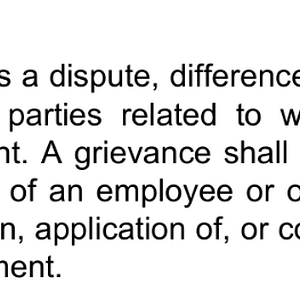
Basically Article 15.3.Step 1.a: which states that "Any employee who feels aggrieved must discuss the grievance with the employee’s immediate supervisor within fourteen (14) days of the date on which the employee or the Union has learned or may reasonably have been expected to have learned of its cause." Only the immediate supervisor in the location where the action happened would be qualified to have this discussion. Your "home office" would have no insight into or ability to resolve something in another office.Any documentation or employee manual that states this?

I'd file in both, but at least the home office. If one office wants to accept or waive jurisdiction, let them put it in writing with the union.Must you file a grievance in the office where an issue occurred or for those that work in multiple offices, should you file where you are domiciled?
AWESOME comment that....I'd file in both, but at least the home office. If one office wants to accept or waive jurisdiction, let them put it in writing with the union.
Consider this scenario:
Local management improperly directed an RCA to report to proxy office for Sunday delivery, while proxy management didn't review sunday work desired lists for schedule accuracy.
In both cases, there exists a supervisor entity with power and authority to direct. The proxy manager can't evade responsibility by pointing to a peer-level manager as the culprit, as the proxy manager may decide to modify or ignore the local manager's directions.
Similarly, the local manager cannot effectively "direct" the subordinate employee when they're not on the clock, nor on site, nor in an office they lack managerial authority to direct.
Additionally, the proxy and local managers may each have different zeal for enforcement of real or imaginary rules.
If one manager an order that conflicts with the other manager, which manager has grounds to issue discipline for "failure to follow instructions"?
File in both so the union can't reach for another "plausable deniability" excuse that you "filed in the wrong office and now your window to file has passed." Some of the NRLCA reps behave like slippery little miscreants.
Let the union take the fall if they wish to withdraw.

From the OP's question, it is very evident they know where the "issue" occurred. They need to file with the "guilty" supervisor.I'd file in both, but at least the home office. If one office wants to accept or waive jurisdiction, let them put it in writing with the union.
Consider this scenario:
Local management improperly directed an RCA to report to proxy office for Sunday delivery, while proxy management didn't review sunday work desired lists for schedule accuracy.
In both cases, there exists a supervisor entity with power and authority to direct. The proxy manager can't evade responsibility by pointing to a peer-level manager as the culprit, as the proxy manager may decide to modify or ignore the local manager's directions.
Similarly, the local manager cannot effectively "direct" the subordinate employee when they're not on the clock, nor on site, nor in an office they lack managerial authority to direct.
Additionally, the proxy and local managers may each have different zeal for enforcement of real or imaginary rules.
If one manager an order that conflicts with the other manager, which manager has grounds to issue discipline for "failure to follow instructions"?
File in both so the union can't reach for another "plausable deniability" excuse that you "filed in the wrong office and now your window to file has passed." Some of the NRLCA reps behave like slippery little miscreants.
Let the union take the fall if they wish to withdraw.
In actuality we have network of inept management between hub and spoke offices that like to claim ignorance in an attempt to absolve themselves. It is great knowing I can take multiple shots at moving targets and hopefully the union will step up and take some action since they will be given plenty of opportunities.From the OP's question, it is very evident they know where the "issue" occurred. They need to file with the "guilty" supervisor.
Indeed, but if it were me (which I know it's not) I'd also file in the other location(s) to minimize or eliminate the opportunity for finger-pointing shell games.From the OP's question, it is very evident they know where the "issue" occurred. They need to file with the "guilty" supervisor.
I could see a real problem if you have different stewards handling the same issue in different location. Because based on the language of Article 15 each steward has the right to resolve it themselves.In actuality we have network of inept management between hub and spoke offices that like to claim ignorance in an attempt to absolve themselves. It is great knowing I can take multiple shots at moving targets and hopefully the union will step up and take some action since they will be given plenty of opportunities.
Perhaps so.I could see a real problem if you have different stewards handling the same issue in different location. Because based on the language of Article 15 each steward has the right to resolve it themselves.


Here's the thing, at the end of the day this is not about the union. It's about getting the best proper result for the grievant! My point it that if you are getting multiple people at different locations (which may or may not have any knowledge or abilities to assist) you are complicating the grievance. If we are talking about a straight contractual grievance, it does nobody any good to complicate the issue. If it is truly something that spans multiple locations, then the DR/ADR needs to get involved to help resolve the situation. As a former steward for many years, I always used and taught the KISS approach. Served me well over the years and saved many carriers careers.Perhaps so.
I think the specific problem of dividing the question could pop up if even if it were a chief or area steward or a DR/ADR over the conflicting locations. Maybe some handbook from the AS-series has the answer for such a layout.
Which part of the problem belongs to which steward, and what resolution belongs to which office? Consider the vectors of a "cease and desist" agreement.
Back when I was more into NRLCA happenings as an area steward, I remember bringing this jurisdictional issue to a few of the National Officers at one of those mind-numbingly pointless Area Conferences. They just dismissed the question as an unlikely rarity.
I wouldn't hold my breath, but maybe they've seriously considered it since then.
I am so out of date on this one that I may be totally off the mark.
I thought we were supposed to file the grievance with the immediate acting supervisor.
If we are serving multiple locations and add that we must file with the supervisor in that location, we make the 15-day timeline to file much more difficult. I remember when we had an area steward traveling all over the Northern Part of the state trying to find who was responsible for his grievance.
I always viewed a grievance as being with the Postal Service, not the individual it is about. The immediate supervisor may write on the grievance that he or she was not directly involved and needs to get the information to respond to the grievance.
I realize this does not solve your discussion but given the structure of the grievance process it seems the only practical way to deal with it. We don't have time to chase these things down.
I can tell you this from my personal experience, and this is on me 100% not the NRLCA. I was never discouraged from initiating a grievance by anyone above me in the steward system. My personal view was that if it was not important enough to you to file the grievance then why should I. Now don't get me wrong, there are times where intimidation of a carrier was actually a real thing and under those circumstances I would if needed initiate the grievance. But as I said, there was NEVER any discouraging of me filing if the situation warranted it.I'd just file a grievance at each office. The union can withdraw any of them they determine aren't relevant. If the supervisor is clueless on it, then the postmaster will have to do some digging come time for the step 1 meeting with the rep.
Unlike the City Carriers union, the NRLCA discourages its reps from filing on any violations, regardless how obvious or repetitive management's violation may be. In short, the grievant is on their own to initially attack the issue. If a grievant waits too long though, the 14-day time limit may lapse, waiving the issue.
All filed grievances are property of the union. The NRLCA wanted to represent the rural craft at the National level. I'd hold them to it.