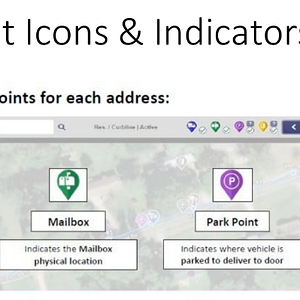
Address is an IP address. It is different for every scanner. If you post it, you'll dox (reveal your identity) yourself.Address seems to be a GPS coordinate. Bunch of numbers separated by 3 periods.
I sat for exactly one minute and recorded my RSSI (whatever that is). It changed 6 times in those 60 seconds. -95, -96, -255, -96, -255, -102
Signal = 99
Radio = ON
But what does it mean??? (Reference to Hitchhiker’s Guide to the Galaxy when the answer “42” was given).

You are using an out of date browser. It may not display this or other websites correctly.
You should upgrade or use an alternative browser.
You should upgrade or use an alternative browser.
No cell signal test
- Thread starter Augsburg
- Start date
My theory is that the location accuracy is effecting the coverage area % to a point where 'breadcrumbs' and dps aren't good enough metrics to establish those percentages. I'm looking for correlations. Management can look at the breadcrumbs, so if know your in a dead zone at let's say 12:30, check the rssi, take note at what box you're at and see if the bread crumbs match. But don't stop for long because it gives the gps a chance to generate a more accurate location.What are we looking for? My RSSI drops, but everything else stays pretty much the same. Btw, I was in Augsburg in the eighties.
Attachments

Address seems to be a GPS coordinate. Bunch of numbers separated by 3 periods.
I sat for exactly one minute and recorded my RSSI (whatever that is). It changed 6 times in those 60 seconds. -95, -96, -255, -96, -255, -102
Signal = 99
Radio = ON
But what does it mean??? (Reference to Hitchhiker’s Guide to the Galaxy when the answer “42” was given).
Attachments

If this thread reveals too much I think the ability to see rssi won't be on the scanner MondayInteresting

scratching my head here
What is it that you're trying to figure out specifically here? Demonstrate that the MDD is too inaccurate to register a stop? The engineering report put in 'slop' to handle the 'noise' of fixes for registered stops. And as the engineers specifically noted, the fewer terrestrial fixes to compliment satellite signals, the much more likely the distance between boxes and the easier to fix those boxes to mapped points already in the system.
The majority of 'coverage' calculations comes from mapped addresses in AMS linked through delivery point sequencing. With the improvements in package identification and the mandating of mailers providing their own addressing rather than simply depending on OCR decoding, as the engineers predicted in their reports, more and more data will not be required from the MDD as more and more data is generated at the network level.
The biggest 'hole' I'm seeing in the system at the moment that's not being accounted for is non-trackable mail being picked up at boxes and I've already seen some suggestions on the national level on how to address that to give credit to routes and stations where it's coming from. The blind spot of locally sorted mail being registered for station and route credit is yet another datapoint that probably will have to be accounted for in spot checks during the year.
End result will be just fudging the numbers by another percent in coverage most likely. But we've honestly spent very very very little effort on a national level to identify how much mail is being sorted at the office to go back out to routes in raw mail. And honestly, the more efficient the station, the more likely that percent is being missed, but on the macro level? It's money not being paid, but it's panning for the most fine gold dust, less than 10 minutes of standard evaluation a week? The cost to verify those numbers would probably make the most proactive response by both the union and USPS to just simply say 'routes that fit the following model will have 10 minutes of standard time added to their routes per week.'
I'm not saying it's not worth going after, 10 minutes can change an evaluation up a level.
And by the by, if you want similar data to what the MDD is capturing in a visual format, sign up for a Waze account, use it each day, and you'll see very similar bead crumb trails to the MDD heartbeat marked on the map in the edit mode. Location services turned on with Google maps? You also can get a very similar aGPS trail as well.
What is it that you're trying to figure out specifically here? Demonstrate that the MDD is too inaccurate to register a stop? The engineering report put in 'slop' to handle the 'noise' of fixes for registered stops. And as the engineers specifically noted, the fewer terrestrial fixes to compliment satellite signals, the much more likely the distance between boxes and the easier to fix those boxes to mapped points already in the system.
The majority of 'coverage' calculations comes from mapped addresses in AMS linked through delivery point sequencing. With the improvements in package identification and the mandating of mailers providing their own addressing rather than simply depending on OCR decoding, as the engineers predicted in their reports, more and more data will not be required from the MDD as more and more data is generated at the network level.
The biggest 'hole' I'm seeing in the system at the moment that's not being accounted for is non-trackable mail being picked up at boxes and I've already seen some suggestions on the national level on how to address that to give credit to routes and stations where it's coming from. The blind spot of locally sorted mail being registered for station and route credit is yet another datapoint that probably will have to be accounted for in spot checks during the year.
End result will be just fudging the numbers by another percent in coverage most likely. But we've honestly spent very very very little effort on a national level to identify how much mail is being sorted at the office to go back out to routes in raw mail. And honestly, the more efficient the station, the more likely that percent is being missed, but on the macro level? It's money not being paid, but it's panning for the most fine gold dust, less than 10 minutes of standard evaluation a week? The cost to verify those numbers would probably make the most proactive response by both the union and USPS to just simply say 'routes that fit the following model will have 10 minutes of standard time added to their routes per week.'
I'm not saying it's not worth going after, 10 minutes can change an evaluation up a level.
And by the by, if you want similar data to what the MDD is capturing in a visual format, sign up for a Waze account, use it each day, and you'll see very similar bead crumb trails to the MDD heartbeat marked on the map in the edit mode. Location services turned on with Google maps? You also can get a very similar aGPS trail as well.
Dumbassclerksyndrome
Well-known member
Loved the last one
“ don’t design a reliable system to work with this weak of a system…”
“ don’t design a reliable system to work with this weak of a system…”
LOL. You mean yet ANOTHER example of concealing the truth ?If this thread reveals too much I think the ability to see rssi won't be on the scanner Monday
When you have high volume dps routes with less than 50% coverage factor...something is most definitely wrong with the reporting system. Either dps is not actually the reliable tool they say or the scanner gps ping is not registering. Internally, usps is looking into coverage factor because of anomalies. We have other routes that were given 100% coverage factor with very light mail.scratching my head here
What is it that you're trying to figure out specifically here? Demonstrate that the MDD is too inaccurate to register a stop? The engineering report put in 'slop' to handle the 'noise' of fixes for registered stops. And as the engineers specifically noted, the fewer terrestrial fixes to compliment satellite signals, the much more likely the distance between boxes and the easier to fix those boxes to mapped points already in the system.
The majority of 'coverage' calculations comes from mapped addresses in AMS linked through delivery point sequencing. With the improvements in package identification and the mandating of mailers providing their own addressing rather than simply depending on OCR decoding, as the engineers predicted in their reports, more and more data will not be required from the MDD as more and more data is generated at the network level.
The biggest 'hole' I'm seeing in the system at the moment that's not being accounted for is non-trackable mail being picked up at boxes and I've already seen some suggestions on the national level on how to address that to give credit to routes and stations where it's coming from. The blind spot of locally sorted mail being registered for station and route credit is yet another datapoint that probably will have to be accounted for in spot checks during the year.
End result will be just fudging the numbers by another percent in coverage most likely. But we've honestly spent very very very little effort on a national level to identify how much mail is being sorted at the office to go back out to routes in raw mail. And honestly, the more efficient the station, the more likely that percent is being missed, but on the macro level? It's money not being paid, but it's panning for the most fine gold dust, less than 10 minutes of standard evaluation a week? The cost to verify those numbers would probably make the most proactive response by both the union and USPS to just simply say 'routes that fit the following model will have 10 minutes of standard time added to their routes per week.'
I'm not saying it's not worth going after, 10 minutes can change an evaluation up a level.
And by the by, if you want similar data to what the MDD is capturing in a visual format, sign up for a Waze account, use it each day, and you'll see very similar bead crumb trails to the MDD heartbeat marked on the map in the edit mode. Location services turned on with Google maps? You also can get a very similar aGPS trail as well.
The scanners are either not reporting, the AI mail system is inaccurate or the usps is using a formula not designed by engineers in the software capture. Something is most definitely hinky.
Yeah, remember when carriers could post scanner temperatures?LOL. You mean yet ANOTHER example of concealing the truth ?
I don't believe it is "or" and "or" , I believe it is ALL of the above COMBINED that you mention and MORE .When you have high volume dps routes with less than 50% coverage factor...something is most definitely wrong with the reporting system. Either dps is not actually the reliable tool they say or the scanner gps ping is not registering. Internally, usps is looking into coverage factor because of anomalies. We have other routes that were given 100% coverage factor with very light mail.
The scanners are either not reporting, the AI mail system is inaccurate or the usps is using a formula not designed by engineers in the software capture. Something is most definitely hinky.
If the route is properly mapped, and DPS is coming in route sorted, coverage should be automatically recorded. If coverage is not being properly accounted for off of DPS, it's not MDD data that's the issue here, its the integration of AMS/DPS and route mapping.When you have high volume dps routes with less than 50% coverage factor...something is most definitely wrong with the reporting system. Either dps is not actually the reliable tool they say or the scanner gps ping is not registering. Internally, usps is looking into coverage factor because of anomalies. We have other routes that were given 100% coverage factor with very light mail.
The scanners are either not reporting, the AI mail system is inaccurate or the usps is using a formula not designed by engineers in the software capture. Something is most definitely hinky.
as i understand it, the scanner wont send information until the rssi is within acceptable limits. How that affects anything im not sure. Scanner may be able to get a +/- 30 ft gps location when the rssi is bad. It simply keeps the info until rssi is good, and sends the info then. But does it affect the info and how it can be used to pay us? no idea.When you have high volume dps routes with less than 50% coverage factor...something is most definitely wrong with the reporting system. Either dps is not actually the reliable tool they say or the scanner gps ping is not registering. Internally, usps is looking into coverage factor because of anomalies. We have other routes that were given 100% coverage factor with very light mail.
The scanners are either not reporting, the AI mail system is inaccurate or the usps is using a formula not designed by engineers in the software capture. Something is most definitely hinky.
Not always. You know why high rise routes lost so much? Insufficient addresses. Without an identifier unit suffix number, no credit for any poorly addressed piece.If the route is properly mapped, and DPS is coming in route sorted, coverage should be automatically recorded. If coverage is not being properly accounted for off of DPS, it's not MDD data that's the issue here, its the integration of AMS/DPS and route mapping.
Ex: apartment building 17398 Smith rd apt #
300 apartments.
Mail piece: 17898, 17393, 17898 no unit
40% of daily mail is bad street address and bad individual unit number or no unit number. Exact match in ams or no credit.
Another beautiful thing- markups are based upon dps end run. High rise routes have much more than 3 pieces per 2000 dps.
My carrier in Miami lost 8 hours. They are now an H route with 15 + story buildings of industrial/ residential mix. Again verticle distance counts for nothing.
So what did they put down during the mini-count for errors in DPS? Did they register all that mail which was missing unit numbers? I mean, that was the specific moment in time intended to catch these errors and address them as volume in the count.Not always. You know why high rise routes lost so much? Insufficient addresses. Without an identifier unit suffix number, no credit for any poorly addressed piece.
Ex: apartment building 17398 Smith rd apt #
300 apartments.
Mail piece: 17898, 17393, 17898 no unit
40% of daily mail is bad street address and bad individual unit number or no unit number. Exact match in ams or no credit.
Another beautiful thing- markups are based upon dps end run. High rise routes have much more than 3 pieces per 2000 dps.
My carrier in Miami lost 8 hours. They are now an H route with 15 + story buildings of industrial/ residential mix. Again verticle distance counts for nothing.
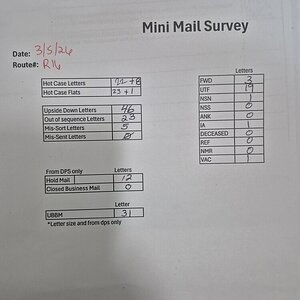
Unless they failed to process dps in normal volumes. They withheld coverages and standard from mailsurvey to reduce residual mail. Then, the brain surgeons declared any ubbm from dps as not creditable under second count. All carriers filed, still in dispute as numbers were not included in most recent evaluation. Usps has truly gone rogue.So what did they put down during the mini-count for errors in DPS? Did they register all that mail which was missing unit numbers? I mean, that was the specific moment in time intended to catch these errors and address them as volume in the count.
This system has potential to be more manipulated than the last one. Starting with the fun and games of which days they restrict dps runs to reduce coverage. Hold volumes to run on a day they must run a wss in dps.
Last edited:
I mean, is that possible? Sure. Likely in the slightest? Absolutely not. Do you think that all the craft at the plants would be screaming from the rafters about holding back mail during the mini-survey? Because trust me, anyone who witnessed something like that would be posting left and right about it.Unless they failed to process dps in normal volumes. They withheld coverages and standard from mailsurvey to reduce residual mail. Then, the brain surgeons declared any ubbm from dps as not creditable under second count. All carriers filed, still in dispute as numbers were not included in most recent evaluation. Usps has truly one rogue.
This system has potential to be more manipulated than the last one. Starting with the fun and games of which days they restrict dps runs to reduce coverage. Hold volumes to run on a day they must run a wss in dps.
You are newish to usps, aren't you? This is not a company you report from within. Other crafts do not work together because they figure as long as usps is messing with someone else- they leave you alone today.I mean, is that possible? Sure. Likely in the slightest? Absolutely not. Do you think that all the craft at the plants would be screaming from the rafters about holding back mail during the mini-survey? Because trust me, anyone who witnessed something like that would be posting left and right about it.
This is a very splintered workforce. And, yes, pictures and manifests were acquired on drops and processing.
Usps position is they have 21 days to process bulk shipments and can hold them as necessary.
I must say, I wish I was still as trusting as you. But, after 30 + years of catching usps in lies and violations and having to correct these omissions, my faith is gone. I deal in facts. The usps supplies plenty of horrible facts.
Dumbassclerksyndrome
Well-known member
Uh actually…. I can attest to if having more to do with than just automation. I’m being reamed over coals because I’m not delivering because cell coverage says I’m not. But this is the perfect system we all waited for to determine our payIf the route is properly mapped, and DPS is coming in route sorted, coverage should be automatically recorded. If coverage is not being properly accounted for off of DPS, it's not MDD data that's the issue here, its the integration of AMS/DPS and route mapping.
I literally watched my plant digging everywhere to find anything and everything to process. BMEU went from an average of 6 hours from drop to being processed on the floor to 22 minutes. (And KiwiCo was very very happy about that...)You are newish to usps, aren't you? This is not a company you report from within. Other crafts do not work together because they figure as long as usps is messing with someone else- they leave you alone today.
This is a very splintered workforce. And, yes, pictures and manifests were acquired on drops and processing.
Usps position is they have 21 days to process bulk shipments and can hold them as necessary.
I must say, I wish I was still as trusting as you. But, after 30 + years of catching usps in lies and violations and having to correct these omissions, my faith is gone. I deal in facts. The usps supplies plenty of horrible facts.
There were MHAs being sent home for lack of work, and they'd be EXTREMELY vocal if there was work on the floor waiting to be done and sent home. Same with PSEs being dropped down in hours.
So yes, if there was mail sitting on the floor not being processed, it would have been expressed. Volume was with 3% on MPE watch for the week prior and the week following the 2 weeks of the mini mail count.
Well, I may be mistaken but I'm not rude like you so there is that.I'm not really sure what value you're adding to this thread.