• Everyone, please help make our jobs easier and choose the correct category. Thank you

Load truck scan confusion

We in Portland Maine were visited by postal inspectors and the rules are you do load truck function when you load your truck not sorting in office .some of our carriers were using load truck function while sorting pkgs inside which inflated their evaluation.also when helping out on other routes you have to come back and complete route before collecting other route items and repeat process including load truck etc and that was also inflating their evaluation
You can do load truck function inside but you are supposed to do that without STARTLOADVEH/Endloadveh . It will not give you any extra load time but help you ascertain whether you received any packages or not . However you are allowed to do load truck function within STARTLOADVEH/ ENDLOADVEH outside while loading . That will gain you few extra minutes in load time . That’s what the postal inspectors ( really ?) we’re talking about . But I have seen plenty carriers doing load truck function within STARTLOADVEH/ENDLOADVEH inside while sorting —- it shouldn’t be though
 
That’s what the postal inspectors ( really ?) we’re talking about.
I share your incredulity about a postal inspector involving themselves in a discussion of rural procedures. I'm curious to know the circumstances.

Sorting/organizing parcels is not supposed to be part of STARTLOAD/ENDLOAD. It wasn't in the old mail counts, and nothing changed with RRECS. In fact, the RRECS Activity Guide (the scanning "cheat sheet") states in its explanation of STARTLOAD "There is no change to previously established loading procedures." Previously established sorting/organizing procedures can be found in the PO 603 223.23, and loading procedures at 262.1.

If management makes a stink about it, they can stop carriers from combining STARTLOAD/ENDLOAD with LOADTRUCK and that might cut off a minute or two from load times, but it might not, as the volume of parcels and their size and shape makes it near impossible to organize them efficiently inside most offices, and, in my experience, STARTLOAD/ENDLOAD times will remain roughly the same.
 
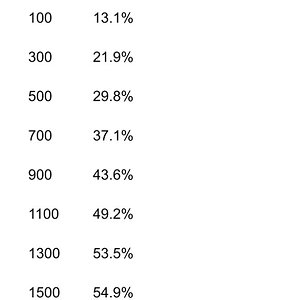
We track actual load time, the “rrecs study observed load times” were too erratic for the time study crew to establish a viable standard within an adequate level of confidence that would accurately reflect actual time loading. Hands were thrown up, and the problem was solved by allowing actual time data. I don’t think they ever timed loading, the various loading methods used by the craft are too varied/complicated to define and subsequently measure. All of the standards rrecs uses are all simplified approximations of reality, I see no reason that a calculated load time wouldn’t be more accurate and fair, calculated off of volume. It would be one calculation of 30, and high or low, when combined with all the other 30 guesses that are either high or low, the route gets an evaluation. A route evaluation should not be lowered because someone wants to load fast, and it shouldn’t be increased because someone loads slooooooooooow.
 
I see no reason that a calculated load time wouldn’t be more accurate and fair, calculated off of volume.
There are a lot of variables with load time, beyond parcel volume, starting with POV vs. LLV. I imagine it's a lot easier/quicker to load an LLV than a Jeep Wrangler. It takes more time to load 10 large parcels of dog food than 10 medium parcels of <insert random plastic crap purchased off Amazon here>. Yet those parcels would count equally under a parcel volume system.

In addition, there are offices where vehicles are parked far, far away, and it takes time for carriers to roll the conveyance out there. And then there are small offices (like mine) where my vehicle is parked 20 yards from the back door. Other carriers in my office are parked 20 feet away. In a lot of offices, carriers are able to pull their vehicles right up to the loading docks and don't walk more than 20 feet.

It's an absolute win for us that we were able to keep this actual time standard under RRECS from the old mail counts, and I can't imagine a time standard developed based upon the small number of offices actually observed during the study would be fairer. And I'll take the engineers word for it that they couldn't figure out a standard time for this activity.
 
There are a lot of variables with load time, beyond parcel volume, starting with POV vs. LLV. I imagine it's a lot easier/quicker to load an LLV than a Jeep Wrangler. It takes more time to load 10 large parcels of dog food than 10 medium parcels of <insert random plastic crap purchased off Amazon here>. Yet those parcels would count equally under a parcel volume system.

In addition, there are offices where vehicles are parked far, far away, and it takes time for carriers to roll the conveyance out there. And then there are small offices (like mine) where my vehicle is parked 20 yards from the back door. Other carriers in my office are parked 20 feet away. In a lot of offices, carriers are able to pull their vehicles right up to the loading docks and don't walk more than 20 feet.

It's an absolute win for us that we were able to keep this actual time standard under RRECS from the old mail counts, and I can't imagine a time standard developed based upon the small number of offices actually observed during the study would be fairer. And I'll take the engineers word for it that they couldn't figure out a standard time for this activity.
They could have conjured a standard, using the factors with the strongest correlation, distance conveyed, number of small medium large parcels, etc. It wouldn’t be perfect, no standard is, they are all simplified approximations, they work well enough for most routes most of the time. The standards for small vs medium vs large parcels share the same flaws for delivery as they would for loading. The drive speed matrix works pretty well most of the time unless you have dirt roads, hills, and winter vs nice roads in Florida. Loading, nominally 1/2 hour for an 8 hour route, so what if it’s off by five or ten minutes, not going to make a real difference. Parcels to door, measured as the crow flys, not the actual drive and walk distance, and ignore stairs and access doors. There is no time for casing dps but most carriers case. The engineers used the existing model of activities from the old legacy system, did not review if experienced carriers actually do those activities in those ways, carriers don’t. So they didn’t define loading, exactly because it is done differently by different carriers. So now with an undefined activity, it is actual time, problem is it is still undefined, and all across the US carriers are timing different sets of activities involved in loading and all calling it the same thing, when it isn’t. It’s ok if your in an office that allows your method, but what individual offices allow varies. Under the old system, you had to have a written explanation if the loading time was over 10 minutes, loading didn’t change, it is still actual time, but it went from 10 minutes to 30 minutes for majority of routes. I’d rather have load time calculated. As far as having just a few offices in the study, that is another problem, the number of offices required for statistical validity is more than the offices used, fewer offices were involved in the study than originally planned, the original number of offices was chosen for validity, but the study went on with far fewer offices. Rrecs was implemented without a beta test, 3-4 years later there is still no rrecs report showing daily data, there is no volume data per individual address, I’m much more concerned with not being able to validate if I’m getting the credit for parcels delivered and actual volume for 12 months after a realignment vs getting shorted 5 minutes on one time measurement out of some 30 odd measurements. The ball was dropped sooooooooo many times with rrecs.
 
They could have conjured a standard, using the factors with the strongest correlation, distance conveyed, number of small medium large parcels, etc. It wouldn’t be perfect, no standard is, they are all simplified approximations, they work well enough for most routes most of the time. The standards for small vs medium vs large parcels share the same flaws for delivery as they would for loading. The drive speed matrix works pretty well most of the time unless you have dirt roads, hills, and winter vs nice roads in Florida. Loading, nominally 1/2 hour for an 8 hour route, so what if it’s off by five or ten minutes, not going to make a real difference. Parcels to door, measured as the crow flys, not the actual drive and walk distance, and ignore stairs and access doors. There is no time for casing dps but most carriers case. The engineers used the existing model of activities from the old legacy system, did not review if experienced carriers actually do those activities in those ways, carriers don’t. So they didn’t define loading, exactly because it is done differently by different carriers. So now with an undefined activity, it is actual time, problem is it is still undefined, and all across the US carriers are timing different sets of activities involved in loading and all calling it the same thing, when it isn’t. It’s ok if your in an office that allows your method, but what individual offices allow varies. Under the old system, you had to have a written explanation if the loading time was over 10 minutes, loading didn’t change, it is still actual time, but it went from 10 minutes to 30 minutes for majority of routes. I’d rather have load time calculated. As far as having just a few offices in the study, that is another problem, the number of offices required for statistical validity is more than the offices used, fewer offices were involved in the study than originally planned, the original number of offices was chosen for validity, but the study went on with far fewer offices. Rrecs was implemented without a beta test, 3-4 years later there is still no rrecs report showing daily data, there is no volume data per individual address, I’m much more concerned with not being able to validate if I’m getting the credit for parcels delivered and actual volume for 12 months after a realignment vs getting shorted 5 minutes on one time measurement out of some 30 odd measurements. The ball was dropped sooooooooo many times with rrecs.
I also would like to know if the package isn’t on our manifest, do we credit for the door delivery for that day? I come back to miss thrown packages daily. I’m told to scan them on hold and just deliver them the next day. But now I’m hearing if it isn’t on the manifest for that day we don’t get parcel delivery credit because it’s not on our manifest. That we need to be scanning it out for re-delivery so it’s added to the manifest. We should not have to do this especially with real customer holds. I thought if we scan it we get delivery credit for the parcel period. If this is true about the manifest then I’ve been missing out on a lot of parcel delivery credits.
Does anyone have a definitive answer for this question?
 
They could have conjured a standard, using the factors with the strongest correlation, distance conveyed, number of small medium large parcels, etc. It wouldn’t be perfect, no standard is, they are all simplified approximations, they work well enough for most routes most of the time. The standards for small vs medium vs large parcels share the same flaws for delivery as they would for loading.
Not to argue with you, but I will. :)

Why would a standard time be better than using actual time? Actual time is the fairest for us. It means people with short load times get paid short time and people with longer load times get paid a longer time. Sure, with a standard some people with short times would be compensated a longer standard time and that's a nice bonus for them, but people with longer times would be penalized.

I can guarantee you that there would be way more carriers being penalized than those getting "bonus" time.

I can see how it would be better for management, as they would have to do even less work, because they wouldn't have to manage carrier performance while loading a vehicle, but I see no advantage for us in using another unfair standard time for a job task.
 
Not to argue with you, but I will. :)

Why would a standard time be better than using actual time? Actual time is the fairest for us. It means people with short load times get paid short time and people with longer load times get paid a longer time. Sure, with a standard some people with short times would be compensated a longer standard time and that's a nice bonus for them, but people with longer times would be penalized.

I can guarantee you that there would be way more carriers being penalized than those getting "bonus" time.

I can see how it would be better for management, as they would have to do even less work, because they wouldn't have to manage carrier performance while loading a vehicle, but I see no advantage for us in using another unfair standard time for a job task.
Standard time delineated properly is pretty much unarguable since it accounts for all the time involved with the activity, and has an additional buffer built in. A proper standard should be beatable by an experienced skilled worker, working with some effort. When there is no standard and actual time is used, slow lazy unfocused poor performers benefit, and conscientious diligent efficient hard working performers suffer. Six experienced professors of Industrial Engineering could have come up with a standard for loading that would have been as accurate as any of the other standards they adopted. I believe they caved to the emotional argument that the craft could be counted on to think that getting an actual time credit would be to their benefit. The biggest headache for me is knowing that at any time there could be an ignorant lazy supervisor scrutinizing my methods.
 
Standard time delineated properly is pretty much unarguable since it accounts for all the time involved with the activity, and has an additional buffer built in. A proper standard should be beatable by an experienced skilled worker, working with some effort. When there is no standard and actual time is used, slow lazy unfocused poor performers benefit, and conscientious diligent efficient hard working performers suffer. Six experienced professors of Industrial Engineering could have come up with a standard for loading that would have been as accurate as any of the other standards they adopted. I believe they caved to the emotional argument that the craft could be counted on to think that getting an actual time credit would be to their benefit. The biggest headache for me is knowing that at any time there could be an ignorant lazy supervisor scrutinizing my methods.
Just like dps, 86 pieces a minute, no thanks, I'll pass on that.
 
Standard time delineated properly is pretty much unarguable since it accounts for all the time involved with the activity, and has an additional buffer built in. A proper standard should be beatable by an experienced skilled worker, working with some effort. When there is no standard and actual time is used, slow lazy unfocused poor performers benefit, and conscientious diligent efficient hard working performers suffer.
that is not necessarily true and your words sound like management.

i am not lazy, slow, unfocused nor a poor performer.

what i am is a hard working carrier with a heavy route who educated herself on what she can legally do to make the most of this wretched system and does so accordingly.
 
Yes we get credit for all parcels we scan. Check this by counting your parcels off your scanner and comparing it to what your manager can look up as having been delivered that day. I checked mine for a month and was continually satisfied that it was accurate.
If carriers are "Encouraged" enough to work under the time it should take to do the job they will fi just that, eventually finding out that makes them an H route.
Speed is not the "end all" as a carrier. It will eventually break your body down or crash you or your vehicle in debilitating accidents.
The many carriers I see beat their evaluations, often do so by wirkung off tge clock, driving wildly, running, and taking chances with their lives and the lives of others. In our medium sized office only 2 out of 20 are actually fast, accurate, and do it safely.
To wish for a new standard put in place of timed events only tells me you regularly beat your evaluation.
Wait until that beating of your evaluation comes back to bite you in the form of an H route, then you will notice speed also kills evaluation.
 
Is there really a speed aspect to our evaluations?

If my data in Rrecs (mileage, volume, mailboxes, CBU's, etc...) says 10 hrs per day, but I bust through it everyday and get it done in 7, are you saying that my new eval having exactly the same Rrecs data as before, is going to go down?
 
I also would like to know if the package isn’t on our manifest, do we credit for the door delivery for that day? I come back to miss thrown packages daily. I’m told to scan them on hold and just deliver them the next day. But now I’m hearing if it isn’t on the manifest for that day we don’t get parcel delivery credit because it’s not on our manifest. That we need to be scanning it out for re-delivery so it’s added to the manifest. We should not have to do this especially with real customer holds. I thought if we scan it we get delivery credit for the parcel period. If this is true about the manifest then I’ve been missing out on a lot of parcel delivery credits.
Does anyone have a definitive answer for this question?
I am also curious about second trips. If I go back out for a second trip (after returning to the office at the end of the day) to addresses I already delivered parcels to on the first trip, would I have to enter another trip to the door to get credit for both trips? I have never done this as I believed the system would automatically know it was a second trip to the door. But now I think rrecs would not know this and combine it 1 trip to the door.
What is the correct analysis? I am from now on entering a second trip to the door when I do second trips to the same address at the end of the day. I also think being sent back out for second trips should be a thing of the past. It likely messes with rrecs and the engineers probably barely considered it because they thought it rare. IN my office, the clerks make a lot of mistakes and carriers come in at all hours so going back out on second trips happens often.
 
Back
Top