• Everyone, please help make our jobs easier and choose the correct category. Thank you

Pre-paid vacation

I'll agree that the nature of tentative isn't strong enough to build a case on so let's see what the union said After the contract was verified. Now we can see the philosophical reasoning behind the contract language, and the negotiators direct interpretation. Even if the board members who negotiated our current contract aren't on the board to ask, their 'opinions' are still available.
Much like lawyers, stewards do Not assert opinions, lawyers may referer to SCOTUS opinions (
2008 Term Opinions of the Court ) to establish the philosophical angle of interpretation/standing etc.
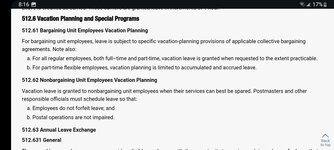
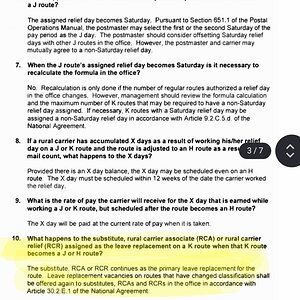
Below are what I see as the opinions of the National Board, who fortunate for us - don't have lifetime appointments.


Picsart_24-04-28_21-02-53-497.jpg
 
Last edited:
It seems to me that, since it is up to management to approve/deny leave, stating that pre-paid vacations are "obvious" helps that decision avoid delay and the grievance process, especially when the other qualifiers are met.
 

Attachments

  • Screenshot_20240428_201644_Chrome.jpg
    Screenshot_20240428_201644_Chrome.jpg
    123 KB · Views: 6
  • Screenshot_20240428_201143_Chrome.jpg
    Screenshot_20240428_201143_Chrome.jpg
    155 KB · Views: 5
I'll agree that the nature of tentative isn't strong enough to build a case on so let's see what the union said After the contract was verified.
Given the context (please correct me if I'm mistaken), I think you meant "ratified", and not "verified".
  1. Under Article 12 of the NRLCA National Constitution, the Association grants parliamentary authority to Robert’s Rules of Order Newly Revised (RONR)
  2. Under RONR, the motion to ratify (also called approve or confirm) is a motion that is used to confirm or make valid an action already taken that cannot become valid until approved by those entities with the power to vote for ratification.
  3. The Association must offer its ratifying voters the contract it had agreed to with the Employer under proviso of a successful ratification. The question being, "shall we ratify X?", not, "shall we ratify some derivative of X?"
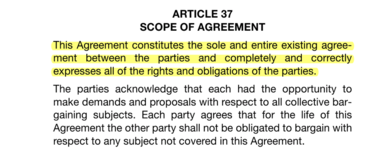
  4. The Association's duty of fair representation does not authorize the Association to bait its ratification voters with one contract, modify the terms of the contract after ratification, then switch the ratified contract with an amended version after the fact.Article 37.png

Now we can see the philosophical reasoning behind the contract language, and the negotiators direct interpretation.

As for the Questions and Answers posted on the Union website, last I checked, there was no affirmation of any joint agreement from any USPS Headquarters-level executive that the questions and subsequent answers were the Employer's responses to those questions.

In past "Q & A" segments, it was clear that the questions were the Union's questions, and the answers were the Employer's answers. However, in today's great Q & A listing, I don't know whose questions those are, nor do I know who answered them. For all I know, the Union just answered a bunch of its own questions. If so, those questions and answers have no inherent weight or binding effect with the USPS.

In terms of contractual elements, if the union examines its own words, the union has transformed "what could be" (X may include Y) into "what is" (X is Y). These elements are extremely different, and a different reliance results from each. It's not just a slight refocusing, it's an entirely different meaning than what was originally offered, and later accepted via ratification.

Even if the board members who negotiated our current contract aren't on the board to ask, their 'opinions' are still available.
Much like lawyers, stewards do Not assert opinions, lawyers may referer to SCOTUS opinions (
2008 Term Opinions of the Court ) to establish the philosophical angle of interpretation/standing etc.
I need further explanation on this point to accept it. There may be some terminology isses we'd need to first resolve for minds to meet.

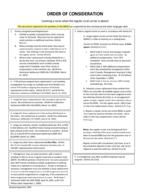
By "opinions" I presume you mean "binding opinions" such as those resolved through arbitration. If this presumption is correct, then board members don't issue opinions (in this sense) either. The Association could issue a position statement (such as that in the Order of Consideration document), but that position is not binding on the Employer, and lacks the force an arbitration opinion carries.

Order of Consideration (O-6).png

Below are what I see as the opinions of the National Board, who fortunate for us - don't have lifetime appointments.

View attachment 12899

National Officers are not "professionals" in the sense that lawyers and judges are. (This is a major factor as to why union officials have so very little liability risk). While there is a "duty of fair representation" obligation, the bar to meet that requirement is low. I'm talkin' "discount sale at the dollar store" kind of low.

While I hope they really "give it their all", the Association has no standards of excellence, nor any competency examinations to become a National Officer. I hope they know their stuff, I'm just not convinced that they all do. 🤷‍♂️
 
Given the context (please correct me if I'm mistaken), I think you meant "ratified", and not "verified".
  1. Under Article 12 of the NRLCA National Constitution, the Association grants parliamentary authority to Robert’s Rules of Order Newly Revised (RONR)
  2. Under RONR, the motion to ratify (also called approve or confirm) is a motion that is used to confirm or make valid an action already taken that cannot become valid until approved by those entities with the power to vote for ratification.
  3. The Association must offer its ratifying voters the contract it had agreed to with the Employer under proviso of a successful ratification. The question being, "shall we ratify X?", not, "shall we ratify some derivative of X?"
  4. The Association's duty of fair representation does not authorize the Association to bait its ratification voters with one contract, modify the terms of the contract after ratification, then switch the ratified contract with an amended version after the fact.View attachment 12909


As for the Questions and Answers posted on the Union website, last I checked, there was no affirmation of any joint agreement from any USPS Headquarters-level executive that the questions and subsequent answers were the Employer's responses to those questions.

In past "Q & A" segments, it was clear that the questions were the Union's questions, and the answers were the Employer's answers. However, in today's great Q & A listing, I don't know whose questions those are, nor do I know who answered them. For all I know, the Union just answered a bunch of its own questions. If so, those questions and answers have no inherent weight or binding effect with the USPS.

In terms of contractual elements, if the union examines its own words, the union has transformed "what could be" (X may include Y) into "what is" (X is Y). These elements are extremely different, and a different reliance results from each. It's not just a slight refocusing, it's an entirely different meaning than what was originally offered, and later accepted via ratification.


I need further explanation on this point to accept it. There may be some terminology isses we'd need to first resolve for minds to meet.

By "opinions" I presume you mean "binding opinions" such as those resolved through arbitration. If this presumption is correct, then board members don't issue opinions (in this sense) either. The Association could issue a position statement (such as that in the Order of Consideration document), but that position is not binding on the Employer, and lacks the force an arbitration opinion carries.

View attachment 12908


National Officers are not "professionals" in the sense that lawyers and judges are. (This is a major factor as to why union officials have so very little liability risk). While there is a "duty of fair representation" obligation, the bar to meet that requirement is low. I'm talkin' "discount sale at the dollar store" kind of low.

While I hope they really "give it their all", the Association has no standards of excellence, nor any competency examinations to become a National Officer. I hope they know their stuff, I'm just not convinced that they all do. 🤷‍♂️
That was very well presented. Though I belive you are correct, I will still use the pre-paid as a qualifier for >60 day request. I'll leave it up to management to come up with the formidable rebut such as yours. Again, well done, I hope your teeth never get fixed (stay on retainer).
 
That was very well presented. Though I belive you are correct, I will still use the pre-paid as a qualifier for >60 day request. I'll leave it up to management to come up with the formidable rebut such as yours. Again, well done, I hope your teeth never get fixed (stay on retainer).
I'd cheer anyone on to get their requested time off. Pre-paid or not.

I stand by every request for annual leave is for a significant life event. Every moment of a person's life is a life event, and every moment is significant to the person living it. 😎

Article 10.7.A.png

The writing lacks forethought.

The three examples were specific events, while "during spring break" is an arbitrary dispensation in time.

What if I wanted the entirety of Chanukah off? Just like spring break, it happens every year. Does that make it not "significant" enough to submit the advance request? 🤔

Does it also mean those who don't celebrate Chanukah also cannot submit in advance during that period? 🤔

What if the wedding was during spring break when my kids are off school? Are weddings during that arbitrary period no longer compatible with annual leave requests submitted greater than 60 days prior? 🤔

Are there any other arbitrary periods where carriers are restricted from submitting annual leave requests beyond 60 days in advance?🤔

They should have just left it alone. We already have a 2-tier pay system. We didn't also need a 2-tier leave program. I'm just waiting for the day that a related discrimination charge hits the fan. 🤦‍♂️

Article 2.png
 
Back
Top