Maybe this thread can be pinned to the top for reference.
I always get asked about the pay system for RCAs. There are also topics now and again about possible incorrect paychecks, etc. I thought I'd put some information all in one place.
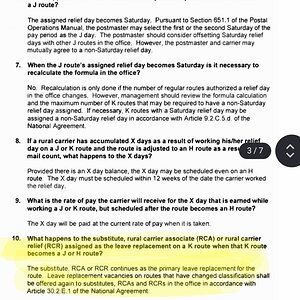
The long and short of it is: if you are an RCA, you get paid the evaluation of a route, regardless of how long it takes you to complete it. However, total up all your actual hours in the week, including additional time helped and Sunday Amazon delivery; if that total is more than 40, forget the evaluated time; you get switched to actual hours for the week (you will get overtime pay for anything over 40).
Here is a long explanation with 4 examples. Please carefully read the examples to help understand how the pay system works.
- Keep in mind that as an RCA I’d recommend forgetting about a route’s weekly evaluation. Do not keep track if a route is a 43K, 44K, etc.
- Keep a daily record of the following:
1) Actual time on the route (including lunch break so you can subtract lunch from the actual hours).
2) The route’s daily evaluated time; such as 8.6, 8.8, 9.4, etc. (This information is listed on the 4240 time sheet for the route)
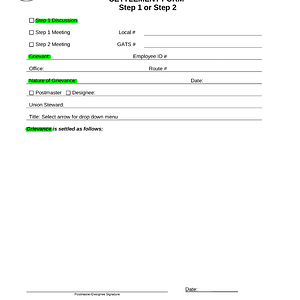
3) Any additional time you spent that day working aside from your assigned route; this includes casing other routes, carrying parts of other routes, or basically anything that you end up having to record and submit on a “green card”.
4) And finally, Sunday Amazon Delivery, which is payed by actual hours worked.
Let’s go through a few examples:
1. Let’s say in one week you worked 5 days, with each day having a daily evaluation of 8.8 hours; 8.8 hours * 5 days = 44 evaluated hours. Let’s say each day you ended up doing the route in 6 hours flat (including the subtracted time for lunch); 5 days * 6 hours = 30 actual hours. Assume that on this particular week you were never asked to help other routes, and you did not work on Sunday for Amazon. Thus, your total actual hours for this week would be 30 hours, and total evaluated hours would be 44. Since your actual hours are less than 40, you are paid evaluation time for the week, 44. Your paycheck would be 44 hours * hourly pay.
2. Now let’s look at another week (a bit more complicated). Let’s say you did the same route for 5 days evaluated daily at 8.8 hours; 8.8 hours * 5 days = 44 evaluated hours. Again assume you finished the route each day in a total of 6 hours; 5 days * 6 hours = 30 actual hours. Now, let’s say each day you were asked to carry part of another route, which you had to write down on a green card and submit. For the sake of simplicity, say every day you worked you had an additional 1 hour working on another route; so for the week your actual time total so far is the 30 hours from above, plus 1 hour every 5 days for a total of 35 hours so far. The 5 extra hours also get added to the “evaluation” pay above; 44 evaluated hours + 5 additional hours = 49. Let’s say that was it for the week; again since your actual work time was less than 40 (35 in this case), you would be paid the evaluation time; 44 + 5 = 49 hours. Your paycheck would be for 49 straight hours of pay.
3. As a 3rd example, let’s take the previous example’s information; you worked 5 days on a route, each day 6 hours actual time, plus 1 hour of additional help each day, and the route’s daily evaluation was 8.8 hours. So again we are at 35 actual hours worked and a total of 49 hours for the evaluated projection. Let’s say in this week you also worked Amazon Sunday. You worked 6 hours on the Sunday, and since the 6 hours on Sunday is always actual time, let’s add it to your week’s total. Your totals become; 35 + 6 = 41 actual hours, and your evaluation total becomes 49 + 6 = 55 hours. Now, since your total actual hours for the week exceeded 40, you will lose the right to be paid for all that evaluated time. Instead of being paid for the 55 evaluated hours, you will be paid for the 41 actual hours (you basically lost 55 – 41 = 14 hours of pay). However, since your actual hours were over 40 in the week, you are entitled to overtime pay at the rate of 1.5. So on your paycheck you will be paid 40 hours plus 1 hour of overtime so 40 + 1.5 * 1 hour = 41.5 hours payed on the paycheck.
4. Finally, here is a 4th scenario. Let’s say you work 4 days in a week, each day the evaluation is 8.2 hours, for a total of 32.8 hours evaluated (8.2 * 4). However, each of the 4 days you completed the route in 9 hours flat; you went over evaluation every day. So your total actual hours for the week would be 9 * 4 = 36 hours actual. So your total evaluated time is 32.8, and your total actual time is 36. The way the pay works is you get payed the evaluation of the route regardless if you complete the route in 5 hours or 11 hours. (Unless you hit over 40 hours in the week, as in my previous examples). So since in this example you are under 40 actual hours, you get paid evaluation, even though you physically worked more than the evaluated time. So your actual work hours will be 36 but your pay will only be for 32.8 hours.