stillfirstclass
Well-known member
giant and why some don't want hourly but i want hourlyplus, they count toward your annual salary and high-3 for retirement, whereas DACA 3 & 5 OT do not....


giant and why some don't want hourly but i want hourlyplus, they count toward your annual salary and high-3 for retirement, whereas DACA 3 & 5 OT do not....
Couldn't have said it better myself. Greed maybe. Js.....What I don’t I understand is if the high option only means you make more money but work an extra day each pay period. why would any regular who waited many many years to work 5 days a week choose to work 6 again?
You shouldn't have to work more to maintain your lifestyle. Just reduce your lifestyle a little.to keep our pay. if our routes go down, the only way to keep our current $ level is to "choose" high option.
it sucks. i don't want to work more to maintain my lifestyle.
clock me.


More money & High 3 calculation. Already working the OT & mgmt can’t skip me if it’s my normal workday due to 2240 issues.What I don’t I understand is if the high option only means you make more money but work an extra day each pay period. why would any regular who waited many many years to work 5 days a week choose to work 6 again?
Regardless of the size of a Regular route & regardless of High or Low Option, ALL routes are entitled to a Leave Replacement.I don’t understand high option, especially with the lack of RCAs.
In most of the offices I cover there aren’t RCAs to cover relief days. So if you choose high option yes, you are no longer in need of a relief day RCA, because YOU will be working Saturday.
But aren’t you already coving your Saturday? But getting paid time and a half with the current MOU?
Basic retirement math:I don’t understand high option, especially with the lack of RCAs.
In most of the offices I cover there aren’t RCAs to cover relief days. So if you choose high option yes, you are no longer in need of a relief day RCA, because YOU will be working Saturday.
But aren’t you already coving your Saturday? But getting paid time and a half with the current MOU?
My dream is having 2 days off a week (I current work 13 days before a day off)
If I had the choice to work 5 or 6 I’d choose 5 and then if I needed to cover my own relief day I’d get PAID OT to do it.
I’m an RCA now, so maybe I don’t really understand. But that would be my mindset.
Well, I’ve got to goworking another Sunday in the hub involuntarily
Cheap 2 bedroom apartment here is going for $2400 month with $5000 deposit fees. If you live in a cheaper state, like Ohio or Nebraska, your monthly housing isn't anything like it is in East or West coast delivery areas. Carriers must deal with local pricing, only so many economies you can't make unless you want to join our homeless.You shouldn't have to work more to maintain your lifestyle. Just reduce your lifestyle a little.
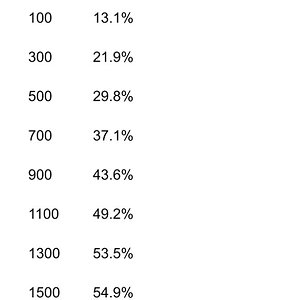
That actually worked for you with DPS. I kept hoping for slim days on my DPS. How they credit you for raw letters is based on what your percentage of raw to DPS is during this survey. So 100 raw letters ends up being worth more to someone who is getting 1500 pieces of DPS than to someone who is getting 2500 pieces.I find it odd that during the mail count period, the DPS, flats, raw bundles was very slim. The day after it ended, we get hit with DPS trays triple what we normally get. I average 3-4 trays daily. During the count, only got 1-2 trays and after it ended, 10 trays!
That actually worked for you with DPS. I kept hoping for slim days on my DPS. How they credit you for raw letters is based on what your percentage of raw to DPS is during this survey. So 100 raw letters ends up being worth more to someone who is getting 1500 pieces of DPS than to someone who is getting 2500 pieces.
You don't really have it wrong but there is a bit more to it than that. Yes, the random letters during the survey are used as an average for the previous 52 weeks BUT so are WSS letters. While WSS letters have a different time standard, they ARE included in the "RAW" / "RANDOM" count and percentage.That's not how I understand it.
If a route had, let's say, 1200 raw letters total for all 12 days of the survey, they will take the average (1200/12 = 100) and use that number (100) as the route's raw value everyday. Until the next survey.
The actual number of DPS letters received is irrelevant.
But someone please correct me if I have that wrong...
Add to that Social Security & TSP.Basic retirement math:
Average high 3 years 70k at 30 years is 1750 month.
Average high 3 years 85k at 30 years is 2125 a month.
An extra 4500 a year to cover Healthcare or other costs.
With the way everything is rising in cost, no one wants to be on a fixed income and find you were priced out of retirement. That is the big reason for high option. And some carriers live in insanely expensive areas. Many can't actually pay basic bills, like housing, without working extra. I hear this constantly at work. It's sad.
I took the high option for many years as the route grew, was cut back to a 43K, grew again, was cut again, etc. Yo-yo effect in a high growth area. I needed to stabilize my income somehow in the time of the Wells agreement. And we shared a sub in a 3 route office. After Amazon appeared in our office, we couldn't keep any subs, but by that time I was a mandatory K route and always took DACA 5. I am retired and now benefit from those high option years as they added to my pension. It does make a difference.What I don’t I understand is if the high option only means you make more money but work an extra day each pay period. why would any regular who waited many many years to work 5 days a week choose to work 6 again?

They have peeps waiting so long as RCAs in many locations, it really does cut short the REG years that actually count toward retirement credit.....;Add to that Social Security & TSP.
I assume that you are calculating at age 62+ & not under..
Unfortunately, most people in my office will only be a bit above 20 yrs at 62.


Because we went formula and I got Thursday, I’d much rather have every other Saturday for more moneyWhat I don’t I understand is if the high option only means you make more money but work an extra day each pay period. why would any regular who waited many many years to work 5 days a week choose to work 6 again?
Likely helped your SS annuity as well.... or will help it, if you're not already drawing it....I took the high option for many years as the route grew, was cut back to a 43K, grew again, was cut again, etc. Yo-yo effect in a high growth area. I needed to stabilize my income somehow in the time of the Wells agreement. And we shared a sub in a 3 route office. After Amazon appeared in our office, we couldn't keep any subs, but by that time I was a mandatory K route and always took DACA 5. I am retired and now benefit from those high option years as they added to my pension. It does make a difference.

If you ever get close to retirement, and understand trying to get a decent pension, you will change your opinion on this.... js.... high-3 is specifically intended to help boost up retirements, and that's the rationale they gave for pushing it to having 10 years as a Reg before requesting it.... live and learn, grasshopper.....Couldn't have said it better myself. Greed maybe. Js.....

My son works in a warehouse , been there almost 2 years , he earns 28,000 less than me a year and I've been at the PO , 27 years !! 46k. He works a 40 hour weekIf it gets to this point that we have to elect to work six days a week then my option is going to be the highway. I put plenty of time into this place to deserve better and I’ll not put up with that. Five days a week of misery is enough and I’m sure some wouldn’t leave no matter what, but this ole boy happens to have a wife and kids he likes a whole lot better than the usps. Not to mention almost every other job around has caught up on pay since when i started
We can always go lowCouldn't have said it better myself. Greed maybe. Js.....

Thank you - this makes sense, I just assumed DACA 5 counted towards total salary & was calculated in to your retirement income.No insult intended... but the extra hours under high option, are OT hours.... plus, they count toward your annual salary and high-3 for retirement, whereas DACA 3 & 5 OT do not....
I was only commenting on USPS time. No guarantee anyone put money in tsp or they have a full 40 year work history for full socsec benefitAdd to that Social Security & TSP.
I assume that you are calculating at age 62+ & not under..
Unfortunately, most people in my office will only be a bit above 20 yrs at 62.